“Clio is a Vibe” – The 2022 ClioCon From the Eyes of a Regular Lawyer

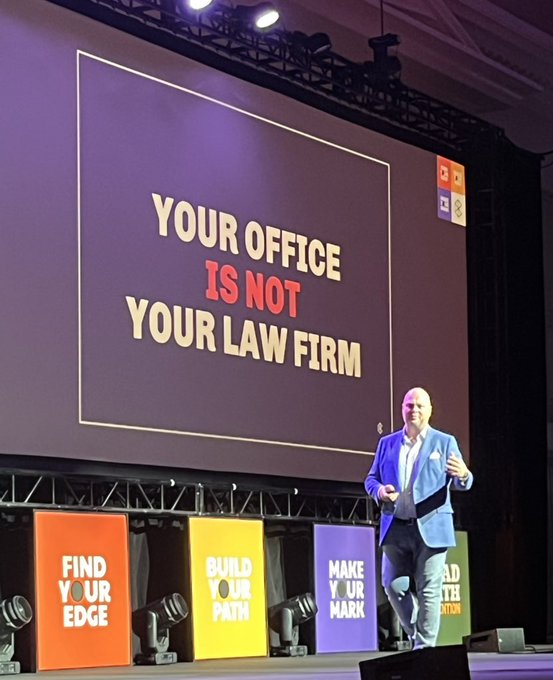
I had a blast at the 2022 Clio Cloud Conference in Nashville.

A legal conference where, at the end, you were sad that it didn’t last longer. Have you ever heard that?

You’ve probably never been to ClioCon then.


The simplicity of that arrow is misleading.
This event was at Opryland Hotel. Everybody was lost, all the time.

Clio is a cloud-based legal practice management platform. With more than a decade of constant feature updates and welcoming third-party app integrations, Clio is designed to be a “one-stop-solution” for running a law firm. Billing. Document management and automation. Intake and client relationship management. Calendaring.

Basically, for everything a lawyer does during the day, Clio’s goal is to make it easier and more efficient. If they don’t offer a solution, let them know, and they’ll create one. One legal tech commentator called their culture “a cult of innovation.”


You probably think this is a paid post. (I mean, who shows this sort of rabid exuberance for legal practice management solutions?)

There are lots of law practice management tools out there, but none have the branding or message that these guys do (or care to have it). Clio casts itself and its users as rebels and disruptors. Clio knows its core audience, and ClioCon is a concert where they play the hits.

I’m telling you, Clio is a vibe.

In his closing address, Clio CEO Jack Newton said attendees were part of a “tribe.” “We are part of a big community here with a common goal of transforming the legal experience for all,” he said.

Legal tech writer Bob Ambrogi wrote this about the 2022 event: “It is no exaggeration to say that this is a conference in which it feels as if every single person is there because they are deeply committed to improving the practice of law and the delivery of legal services through the better use of technology and the innovation of their practices.”

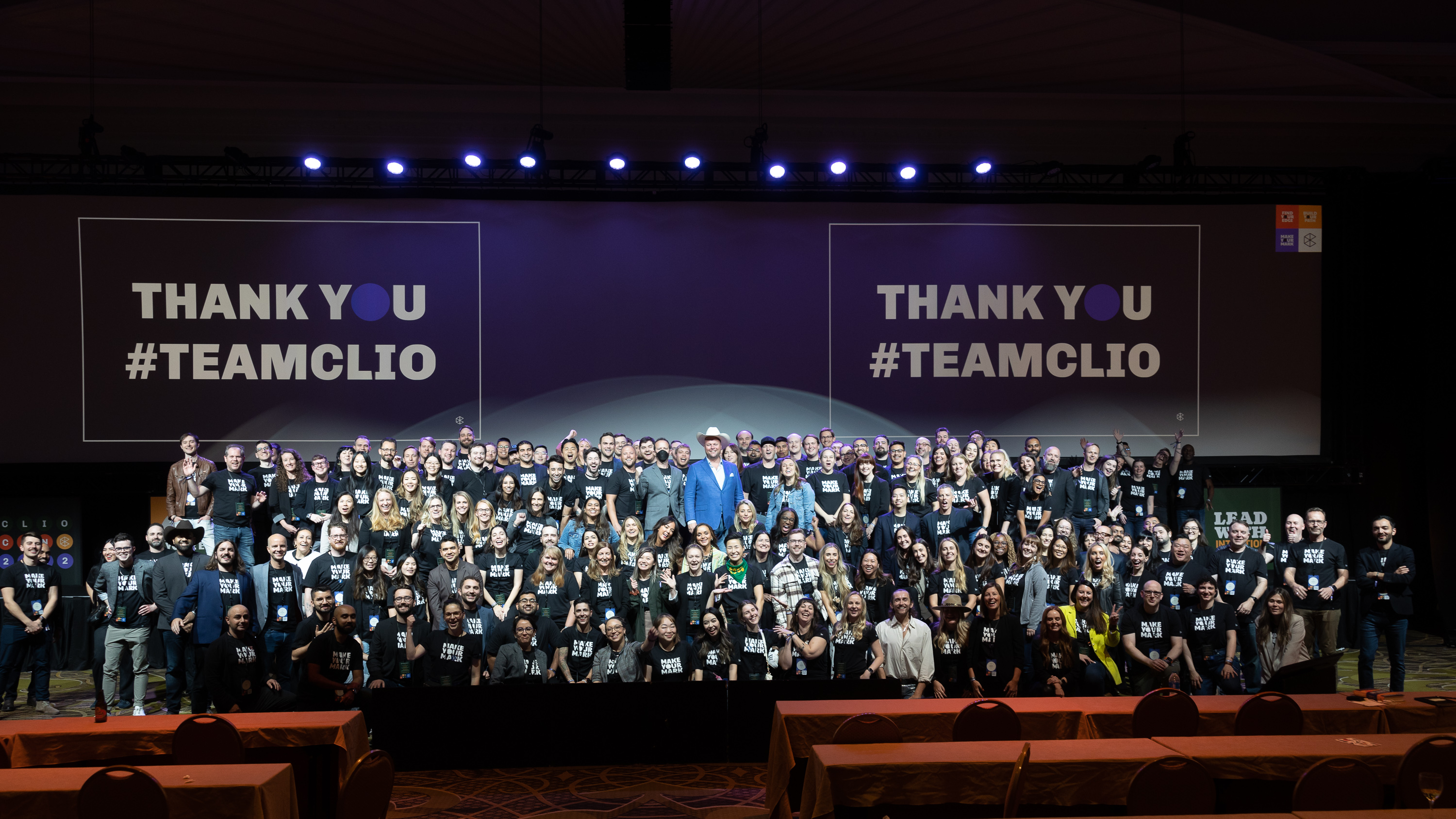
Clio and their some 200 employees were there, at every turn, offering impromptu training sessions, directions (ugh, Opryland Hotel), and friendly smiles.

It was like hanging out with 200 people who really wanted you to be better at your law job, but also were your new best friends, and, occasionally, a life coach.

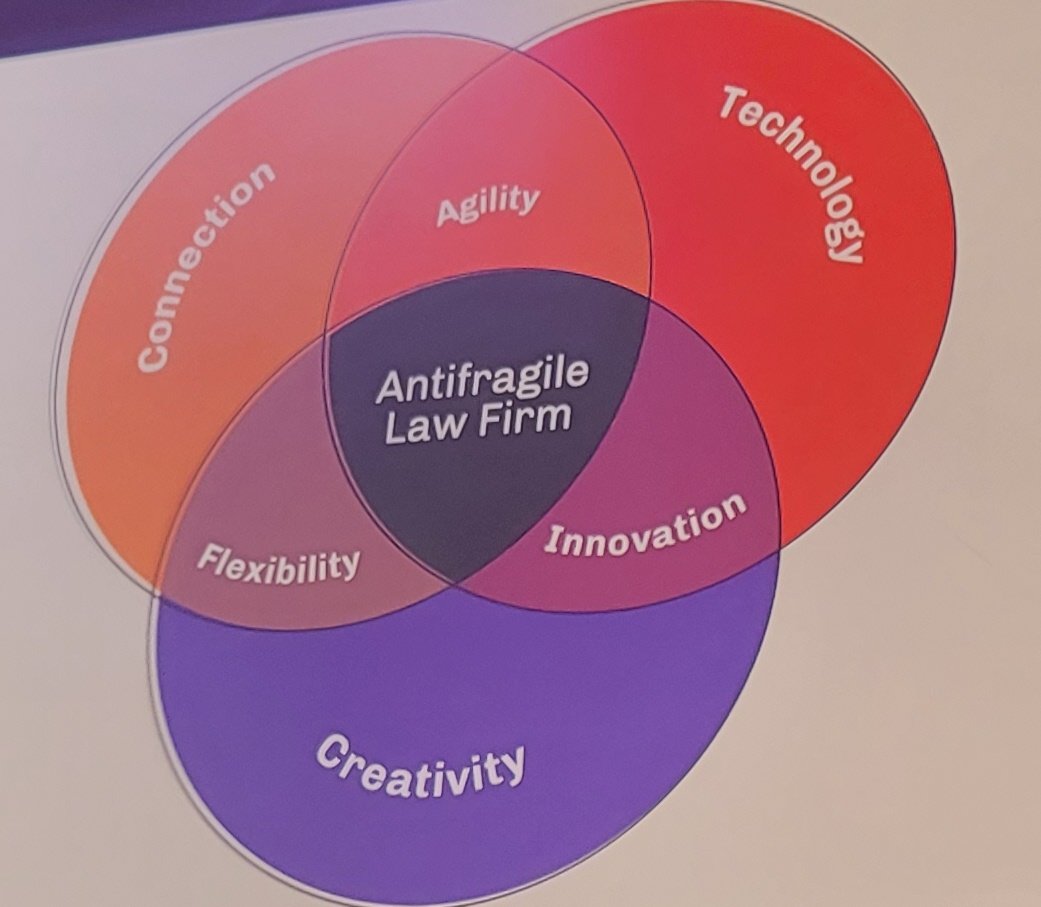
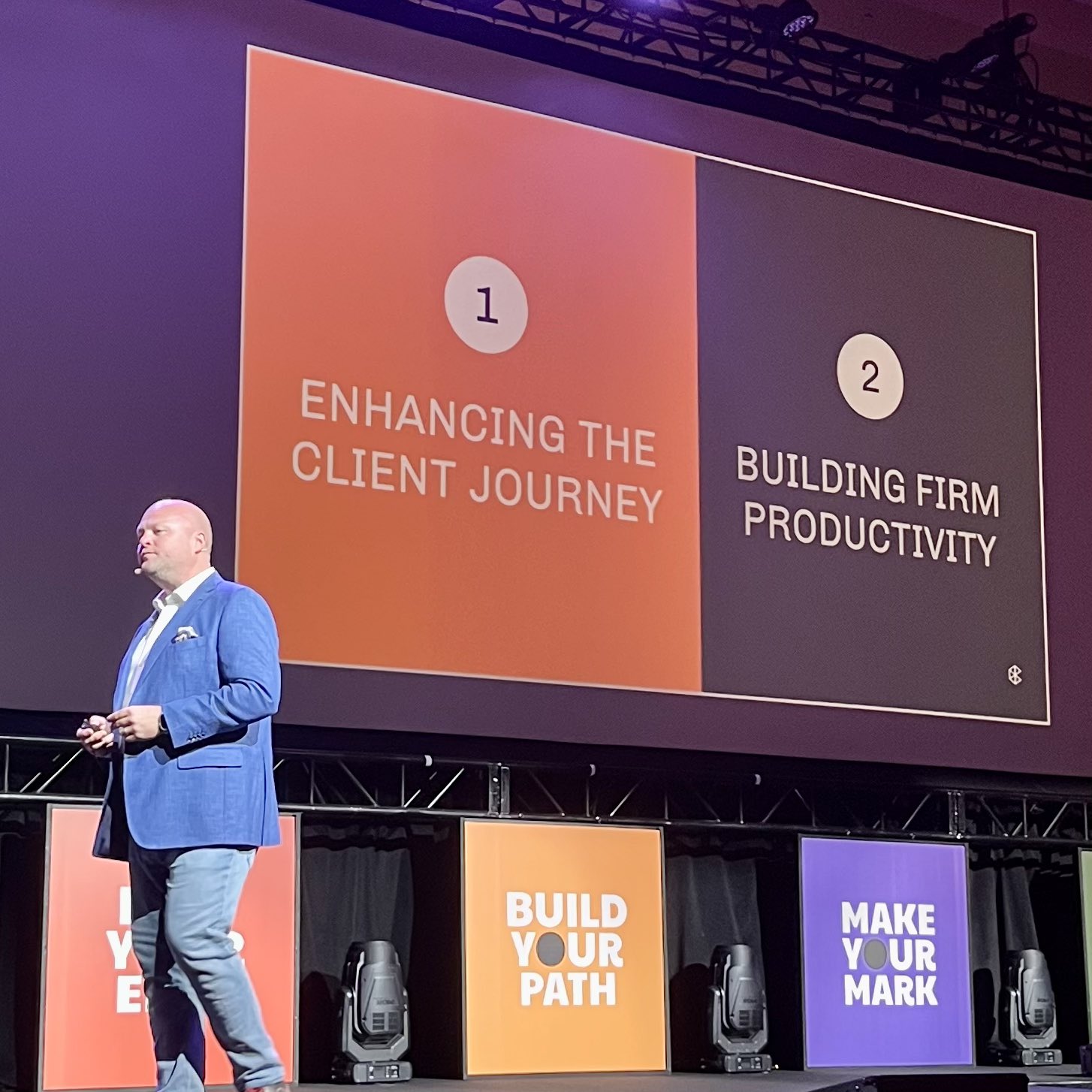
Part instructional, part sales-pitch, part motivational/self-help pep talk, it was hard not to leave ClioCon fired up about being a better lawyer.

(I actually signed up with FOUR new technology service vendors after leaving.)


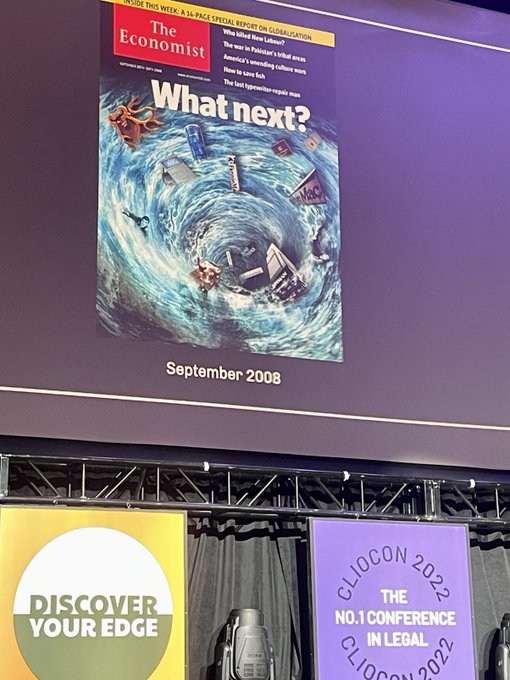
The theme this year was, essentially, the world political and economic landscape is a mess, only getting worse, and we (and our clients) are in for some tough times in 2023. What can we, as lawyers, do to prepare and to provide better service to our clients?

It’s different than a typical legal conference because of the diversity of attendees. People come from all over. Most are lawyers, but some are administrative staff and other legal professionals. Many attendees are neither, but work on innovations in legal technology and processes.


Nevertheless, across the board, the common theme was that we (the Clio staff, the attendees, all of us in the room) are collectively collaborating on something different, rebellious, innovative…and all with the goal to provide awesome service to clients.

Every conversation I had–walking all over that awful hotel; waiting for sessions to start; meals–the topic was “how does your firm [insert some technical/practical law practice task].” “What works/What doesn’t.” People were there for one reason: To be better lawyers.

Who can’t help but get fired up about that?


I’ve attended 3 ClioCons now (the first two were remote, due to the pandemic).

My first year, it felt like we all were in on a big secret. In the early COVID world, it felt scandalous to openly talk about things like virtual law firms, document and client communication automation, and fully cloud-based systems. This was a crowd that held zero regard for “The Way Things Have Always Been Done.”

It felt awesome and liberating to not have a Managing Partner hiding around the corner, waiting to tell you that “we’ll form a committee to consider your idea and tell you ‘No’ in 6 months.”


In the past few years, the rest of the industry has come a long way, but they’re still far behind the types of things that are being discussed as a matter-of-fact at ClioCon.

What I’m saying is this: Find your tribe. If you care about things like disrupting the status quo in the legal industry and ways to be a better (and happier) lawyer, come to 2023 ClioCon in Nashville (yes, again) on October 9-10.

You can register here. I’ve already signed up for it.

My only compliant: No karaoke. Clio, if you’re reading this, call me. I can fix this.

Small Law Firm Life: The Best, The Worst, and All at the Same Time

Three Sundays ago, I got locked out of my laptop.

Neither Dell, Microsoft Support, or frantic prayers could save the day. My working laptop was somehow connected to an expired domain (my expired firm), and it was locked shut. (“A very expensive door-stop,” the nice lady at Dell Support in Texas unambiguously explained.)

After spending 5-6 desperate hours on the phone on a gorgeous early-fall day, I had cobbled together the diagnosis: This is exactly what the system is supposed to do in a situation like this; and The remedy was to wipe the computer and start fresh.

This was bad news.


If you’ve ever sat next to me at an event or at a cocktail hour, you know I like to talk in colloquialisms. For me, it’s a way to survive small talk, but also a way to be authentic and also contextually appropriate (i.e. to make a joke).

Maybe the best response from me would be a simple “I’m fine, how are you?” But, sometimes, why not be honest and funny (especially if you are one of the rare Nashville attorneys who has won a city-wide award for their sense of humor)?

If done well, the response is short, funny, but also brutally (and subtly) honest.


While doing the rounds on the 2021 lawyer holiday party circuit, lots of people asked if I liked my small law practice. My response was generally the same: “It’s the best job on earth, and it’s also the worst job on earth. But never in the middle. Sometimes, I miss the middle.”

It was quick, easy, and honest. For more than a decade, at somebody else’s firm, I spent a lot of years in the middle. I billed my hours and won my cases, but I didn’t have any say in the big (or the day-to-day) firm issues. It was frustrating and unfulfilling, but also comfortable and familiar and easy.

Plus, on any day when my computer didn’t work, I had somebody to call who spent their Sunday figuring it out.

In fact, that’s something I told the Tennessee Bar Association’s Sidebar Podcast last year: “My job used to be to show up, do awesome legal work, and write down my time. Now, my job is to do all that, and also take out the garbage.”


Back to the laptop. In the end, let’s be clear: It all got sorted out.

My legal tech “committee of one” had made the right choices about Clio (a cloud based practice management system), NetDocuments (cloud based documents), and a redundant Microsoft OneDrive backup. Plus, I have a backup computer (“Dynamite”) that is fully functional and has been promoted to first chair.

Other than the hassle, wasted time, and the year of my life that the stress cost me, all ended fine.


Last year, after using my “best job, worst job” line at a holiday party, I got a text the next day, from a managing partner at a local Big Law Firm who I had talked to. Maybe I wanted to interview with them and cut out all the hassle of running my own thing, he asked.

All he had heard was the “worst” part, I guess. It was awkward and awful responding (and I made sure to avoid him at the next holiday party), but I had to be honest: “Hey, thanks and I may take you up on that someday, but I’ve had a long stretch where it’s been the ‘best job’ and I’m going to ride this for a while.”

There’s not really a point here, other than to say that you should be sure to back up your documents in multiple places. And, also, that life is too short to live in the middle. And, finally, not to be too braggy, but small law firm life really is the best.

Let’s Get Political: My Pick for Tennessee’s Attorney General

After voting in Tennessee and Davidson County’s primary elections this morning, I’m feeling a bit political, so I’ll share my endorsement for the Tennessee Supreme Court’s interviews for Attorney General of the State of Tennessee, scheduled for August 8 and 9.

But, first, I’ll tell you a story about Bill Young, one of the applicants. In August 2016, Governor Haslam appointed Young to be a Davidson County Chancery Court Judge, in Part II.

I had never met Bill Young, not until a September 2016 Chancery Court court docket, which–coincidentally–was his first ever court docket as a judge. And my case was the first case heard that day.

I can’t remember the exact issue, but I remember that, pretty quickly, I won the hearing. He ruled in my favor and asked me to prepare the Order. All good, right?

I have a thing I do when I win in Court. I leave the courtroom as soon as possible. Nothing good comes from lingering in court after you win. I don’t need judges reconsidering, or listening to more argument, or some surprise development.

I win. I thank the judge. Then I leave court.

But, that day, as I was leaving–in fact, I can still picture my hand on the big swinging door in Part II of Chancery Court–the Big Firm Lawyer who I beat was still arguing his case. And, worse, this new judge was listening.

So, I went back to counsel’s table, and I defended the logic of the original decision, and, ultimately, I won that hearing (and then left as soon as possible).

But, I also remember thinking “I’m not so sure about this new judge.

As a litigator, my entire job depends on the quality of the judges I appear in front of. With any judge, I watch closely and form opinions about how they handle matters in front of them. Are they prepared? Are they respectful? Are they decisive? Are they smart? And, to a larger degree than is fair, did they agree with me? All very relevant factors to my job and my clients.

Because we had such little Chancery Court judicial turnover in Davidson County, I watched Chancellor Young very closely over those first months.

I’ll cut to the chase. Despite that early skepticism, I really, really enjoyed practicing in front of him during his time on the bench. I came to realize that his demeanor that first day wasn’t indecisiveness; it was a sincere desire to get it right and to make sure that both sides were fully heard.

In fact, the highest compliment I can give any judge is that I respect and trust them, no matter how they rule in my cases. That’s what I have said for years about Chancellors McCoy and Lyle–I don’t always win in front of them, but I trust them. It’s a compliment that I give begrudgingly, after they have earned it after doing good work as a judge.

I quickly felt that way about Bill Young. In fact, my two most vivid memories from court appearances in 2017 were two losses–both in front of Chancellor Young. And I respected both opinions. (As a disclaimer, however, I could argue both cases sitting here today and still feel like I had the better argument on both.)

What’s my point? Politics in this country are more divisive than they’ve been at any point in my lifetime. This divisiveness–bordering on spitefulness–has seeped into Tennessee politics. And I hate that.

Through its work and policy decisions, the Tennessee Attorney General plays a big role in many of those political decisions. When I look at the list of candidates, I see a number of “political” candidates, a few with extreme ideological backgrounds.

I don’t want them to be the next Attorney General. Our State deserves somebody who is cautious, deliberate, smart, and understands the value in making everybody in the state feel heard.

It’s an important decision that will impact the lives of Tennesseans for years to come. You can learn more about the applicants here, and all interviews are open to the public and will be livestreamed to the TNCourts YouTube page.

Everything that I have seen from Bill Young makes me think he’d do a great job as Attorney General for all of the people of the State of Tennessee.

COVID in 2022 and how we’re missing a chance to make the courts safer

After 2.5 years of not catching COVID, I began to think I was special. That, maybe, I had a rare, super-human immunity. That, at some point, future scientists would ask to study my blood to cure unknown diseases.

But, last Sunday, I woke up feeling terrible. My Sunday morning COVID test was negative, so I assumed I’d caught a summer cold.

After 2.5 years of wearing masks, avoiding crowds, and, generally, being really safe, I had hardly gotten sick and, maybe, this is what a cold feels like.

Reality hit two days later, when–still sick–I took another COVID test. And then another. I was 2 for 2 positive.

And I knew that I caught COVID in court.


My last big, pre-COVID night out on the town was a Friday night, February 28, 2020, the week before COVID hit. We went to Cross-Eyed Critters, the best karaoke spot in Nashville. It was the unofficial after-party for our kids’ Parent-Teacher fundraiser, and it was a night for the ages. In retrospect, it was also a post-COVID nightmare, with close talking, jam-packed seating, and no ventilation.

It was also the last time we’ve been in that type of crowd in the past 2.5 years. Early COVID was no joke, and we took it seriously. No more football games, concerts, restaurants, or crowded karaoke for us.

If we didn’t have to leave our house, we didn’t. And, to this day, we still don’t.


The biggest COVID risk for our family has always been me. I’m a lawyer (as you know), and my schedule isn’t always up to me. Part of a lawyer’s job is doing whatever is needed to represent their client, and I take that responsibility very seriously.

Early on, when courts were shut down and virtual, I was fine. In fact, I posted on here all the time about how my job got easier. Lawyers weren’t setting unnecessary matters for hearing, and courts were incorporating new technologies like Zoom trials(!) and e-filing systems to reduce in-person work.

But, despite all the law articles about the Future of the Law, by July 2021, the future was trending back to “the way things have always been done.”

As Nashville lawyer Daniel Horwitz tweeted, “If you thought that we were at risk of staying in a quasi-21st century state of affairs—rather than instantly reverting back to the way law was practiced when people rode horses to court—I assure you, yours fears were never founded.”


And that’s, pretty much, where we find ourselves in July 2022.

It’s a shame, really, because so much of the technology, innovation, and streamlining that we did in response to COVID shouldn’t have been a stop-gap, it should have been permanent.

Those measures didn’t “work” simply because we all weren’t coming down with COVID; they worked because they they were keeping lawyers safe and, also, made the system faster, more efficient, and less expensive.

In a system based entirely on precedent, this wasn’t a surprise; I saw this all happening in November 2020: “8 months in, I haven’t yet seen the more comprehensive changes to court dockets and settings that I had expected. Instead, it’s been a little bit here, gauge the reaction, and then a little bit less in response. In the end, the court system seems to be only making minor tweaks to the ‘usual way of doing things,’ rather than embracing innovative models that could result in future improvements.”

Back then, it felt like we were missing a chance to really make things better. In retrospect, we absolutely did.


Going to court in modern downtown Nashville is a huge pain in the neck. Aside from the unbearable traffic, pedestrian congestion, beer trucks, and construction blockages, you also have to deal with expensive parking, onerous security, and, this time of year, southern heat.

Some matters and arguments may justify in-person hearings. “Bet the company” arguments? Custody battles? Life and liberty at stake? Sure.

The day I caught COVID, I was in court on a heavy docket, opposing a pro se hand-written nonsense Motion (seriously, a piece of paper with a frowny-face would have had more factual or legal basis than what I was dealing with). It was one of the busiest days in Davidson County that I’d seen in years, as I tweeted an hour into my wait:

An hour later, I was still waiting:

My pro se defendant never even showed up, so I ended up winning, but I also sat in a busy courtroom from 8:30 to about noon, just watching other cases (big and small) get argued and responding to emails.

I’m not mad at the Judge on my matter (who is awesome); in fact, when my case was called, he apologized and I assured him that “somebody is last on every docket.” It’s part of being a litigator, right? (Plus, I get to bill for all that.)

But, on a broader level, what’s keeping the court system from putting policies in place that separate cases on a mega-docket into “Will take 30 minutes” and “Will take 5 minutes” stacks and, then, “No hearing needed” or “Phone hearing” stacks?

The Judges can’t enjoy this present system, where 20-30 matters of varying complexity are randomly jumbled together on a Friday morning and the Judges are forced to play whack-a-mole, mixed with lightning-round legal analysis.

If this system is just out of habit and custom, let’s fix that right now. Even without a global pandemic, this can’t be the best way to handle cases.


In my personal life, I’ve valued health and safety over really fun things, like Grizzlies playoff games, exotic trips, and karaoke. But, in my professional life, it’s frustrating to take on so much risk, when it’s both unnecessary and unjustified.

Two years in, we have all this experience and technology, but, nevertheless, we are handling hearing dockets than the same way we did it 100 years ago.

My sharing this experience isn’t meant to complain or scold anybody, but to talk openly about my experience. I know so many lawyers and court staff who have caught COVID in court, but we don’t talk about it, because…it’s embarrassing or we don’t talk about being sick? I don’t know. But, if not talking about it means that we don’t realize it’s a problem, then I hope my story starts that conversation.

In the end, my COVID has passed pretty easily, but I also worry about the people who I came into contact with on Sunday and Monday, before I realized what I had.

What’s worse is, as I type this on Friday morning, my 9 year old daughter woke up with a fever. All because I sat in court last week for 3 plus hours on something that should have taken 3 minutes.

The biggest COVID risk for our family has always been me.

People are getting sick, and we have the ability to reduce the risk. Why aren’t we? What I can do to help?

What’s Up with all the Moves in the Nashville Legal Market?

“Every day” would be exaggeration. But, “every other day” isn’t.

Every other day, I’m reading in the Nashville Post about some out of town Big Law firm buying a Nashville law firm or practice group (or, as Rex Hammock says “acquihire“). Or poaching a bunch of lawyers (or a few). Or just local firms shuffling lawyers like a deck of cards.

It’s absolutely nuts, and I love it. It’s like the NBA trade-deadline, but far more boring–unless you’re a lawyer, and you like gossip (two things that will be on my gravestone).

A few weeks ago, I had a pre-trial lunch with a lawyer from Jones Day in Atlanta, and I asked him if the Atlanta legal market is this crazy with attorney movement. He said, yes, but for associate attorneys.

There was a bit of condescension involved, but implicit in his response was the suggestion that, maybe, this suggests that Nashville is joining the big leagues. Part of becoming one of the “big cities” is being taken over by the “big” law firms.

For years, the Big Law firms never paid any attention to Nashville. Nashville’s legal market was ruled, largely, by home-grown, home-managed law firms whose footprint generally extended a few counties in any direction, but rarely beyond the state lines. Small firms, with big personalities.

If a Big Law firm had a Big Client who needed help in Nashville, they’d call one of the 3-4 big(-ish) Nashville law firms to serve as local counsel. But, in general, the Big Law Firms didn’t think they needed to be actually in Nashville.

That’s what has changed. The national/global law firms now realize they need to be here and are having to catch up by “buying” into the Nashville market. Atlanta isn’t seeing this constant shuffling, because, frankly, all the Big Firms are already in Atlanta.

And what a boon it’s been in Nashville. You know those random calls you get asking if you’d sell your house? That’s what’s happening. But with lawyers.

I’m curious about what the next 4-5 years holds in store in the Nashville market. Part of what has made Nashville’s legal world special is the eccentric independence of so many firms here in town. Sure, there are local folks you dislike having cases with, but at least you know them.

After a bunch of out-of-towners start buying up your neighbors’ houses, your property increases in value. But you don’t know your neighbors anymore.

So far, the shift to a global practice hasn’t made local deals any easier or more pleasant for me. With a year’s worth of perspective, though, I think it’s an inevitable part of our evolution as a city.

Recently, I dealt with Arizona lawyers on a hipster donut store lease in “southern Davidson County,” but they had no idea what I was talking about when I said “Brentioch.”

I’ll go back to what I said last year: What’s good for the Nashville legal market is going to be, generally, good for Nashville lawyers.

For a while, I was afraid to even mention all the local moves, worrying that this group or that group would think this post was about them. But that was probably 50 acquihires ago. This post is, literally, about the entire market (since we’ve all seemed to switch firms since 2019).


As long-time readers know, when I get busy with work, this blog suffers. As I’m nearing my anniversary of my firm’s current incarnation, I’ll be posting more, mainly as a way to share and discuss this solo- and small practice adventure over the last few years.

Service of Process: Just Like in Hollywood (Part 2)

It’s a strange day when legal procedural issues get top billing on the Today Show

As you may have seen, Jason Sudeikis served his ex-Olivia Wilde with legal papers while she was, literally, on a public stage talking about her upcoming movie. The photos from the event show her, in real time, opening the packet and reading the custody papers. On stage.

It’s news-worthy because it seems like such a jerk thing to do, especially given the public persona of Sudeikis, who is famous for playing the nicest character on modern TV and, generally, regarded as a nice person in real life.

Seriously, Ted Lasso isn’t just nice, but inspirationally nice. I can’t count the number of showy LinkedIn posts talking about life lessons people have learned from Ted. One review called the show a “warm hug of nice.”

But, this? This seems like a big-time jerk move.

I’ve written about this frequently: Service of process can be the hardest part of litigation, and a party may be forced to go to great lengths to get somebody personally served with legal papers. It may be a little too “on the nose” to cite examples from Hollywood, but this sequence from Pineapple Express is hilarious and procedurally accurate. It’s also a huge deal: Ineffective service of process can ruin your entire lawsuit.

Personally, in trying serve an evasive defendant, I’ve researched social media, court dockets, or anything else that will help me locate where and when the defendant may be. My process server has shown up holding a bouquet of flowers, an empty cardboard box, and waited at the end of a bike race, looking for Racer # 3433 at the finish line.

So, did Sudeikis do something wrong? It depends. Was Olivia Wilde evading service, requiring them to go to this extra mile to “catch” her? We don’t know that.

But, we do know this: This move is inflammatory and is going to make this litigation more difficult. As lawyers, we are faced with all sorts of “allowed” procedural tactics that sound great on paper, but that can also skew litigation into scorched earth territories in real life. Part of a good lawyer’s job is to talk clients out of those tactics and focus on the bigger picture.

Here, Sudeikis has already disavowed the action, saying that neither he nor his lawyer approved this rogue decision by the process server.

But, looking at the big picture, the damage may already be done. This custody battle just got a lot more contentious. And, honestly, it’s going to be weird watching Ted Lasso manage his own divorce and custody issues knowing what I know about this messy real-life drama.

Davidson County Election Picks from a Nashville Lawyer

Last night, I hosted a neighborhood “meet and greet” for a judicial candidate, and one of my neighbors told me something I didn’t know: We all watch your front yard, to see which candidate signs you have.

At the party, I saw this in real time, as neighbors showed up with pens, the Davidson County sample ballot mailing, and lots of questions.

If you put me in a roomful of people asking me questions, I’ll talk. Having said that, it was terrifying, seeing people circle names (or “X” out others) based just on what I was saying.

But, our city needs good judges and, as I shared my thoughts, I realized that my first-hand knowledge was useful to these people, who had never set foot in the courthouse. I go to courts in Davidson County for a living and nothing impacts my work as much as the quality of the local judiciary. So, I offered my honest and measured comments on each race.

I’ll share (some of) my comments with you all too:

First Circuit Court Judge (Division 1): I pick David Briley over Wendy Longmire. David has a compassionate heart for regular people and a calling to public service, coupled with a strong legal mind. I worked at a law firm with David Briley for more than 13 years, so I’m biased–but in a good way. He regularly represented individuals in personal injury cases, as well as pitched in on the biggest cases the firm handled. Personally, he and I teamed up on a construction lawsuit against one of America’s largest fast food chains, and I got to see him operate in my world. I was impressed (and so was my client). He’s also a nice, conscientious person. He’s someone who I trust to make the right decision.

Seventh Circuit Court Judge (Division 7): This is the Probate Court, and I don’t do probate law. But I know somebody who does it all the time: Andra Hedrick. And she’s running for Probate Judge. By my own review, she’s the most qualified candidate in terms of actual, practical experience. She’d be a great probate judge.

Eight Circuit Court Judge (Division 8): I support Kelvin Jones, the incumbent. He’s smart (look at his resume), and, when I can support candidates whose background and race reflect the larger community they serve, I have promised to do it. If you talk to him, you’ll see that he cares. This is a tough one (people I trust really disagree on these candidates), and I approached this race with a very open mind. I have gone to events for both candidates, and I see a clear argument for both. In short, do your research, and I won’t argue with you on this one.

Criminal Court Judge (Division 5): Whenever a big criminal case is shown on the news, it tends to have Monte Watkins as the judge. And he always does a good job. He’s a good judge and a good person.

District Attorney: My first legal job was a summer clerkship at the Shelby County District Attorney General’s Office, and I learned, quickly, that it’s a hard job. Glenn Funk is doing a good job. I don’t do criminal defense, so my measure is how often do I–as a regular citizen–hear complaints about the DA’s office (like what happens in other cities). I just don’t hear about problems with Funk’s office. I trust him and his values.

Chancery Court Part III: There may be no court that I care more about than Chancery Court, Part III. “Chancellor Lyle is the best judge I’ve ever appeared in front of,” and this is her court. When she announced her retirement, I was curious about who would be brave and bold enough to fill those shoes. I am pleased that my friend and former colleague, I’Ashea Myles, is that person. Myles isn’t just running for office, she’s looking to make history as the state’s first ever African-American female chancellor. We need judges who have guts. She’s got my vote.

General Sessions Judge, Division III: Melissa Blackburn may be the hardest working Judge in Davison County. Civil Dockets. Criminal Dockets. The Mental Health Court. The Veterans Court. And, to be announced later today, a new project helping to move individuals ruled incompetent through the system in a way that gets them help–and maybe out of the system.

General Sessions Judge, Division VI: No matter what type of case, I’d trust Jim Todd to get it right.

General Sessions Judge, Division VII: The first 2022 election sign that I put in my yard was for Marcus Floyd. He’s a great, smart guy (and a Hillsboro High graduate), and he’ll be an asset to this city for decades to come.

General Sessions Judge, Division VIII: This is also a close one, with spirited and smart people on each side. In a close race, I tend to favor the incumbent, Rachel Bell. Some folks may complain about the start time of her dockets, but I’d point out what she’s done to help people in Davidson County avoid eviction during the pandemic with the L.E.G.A.C.Y. Housing Resource Diversionary Court and Program, which has helped thousands of tenants (and, yes, landlords–as of September 20, 2021: $18,799,705.71 had been paid to landlords), and also her long-standing expungement clinics.

General Sessions Judge, Division IX: I appreciate that, no matter the case, Judge Lynda Jones never treats any case (or litigant) as a “small” claims matter. She is focused on getting it right, including past efforts to create a business docket in General Sessions. She’s ambitious and works hard.

Circuit Court Clerk: The current clerk, Ricky Rooker, is one of the best in the state, partly because he’s been doing it for so long. Everything they do seems to take lawyers’ needs into account, and they had a smooth transition to a very effective e-filing system in 2020. Part of that success was due to Rooker having a very good deputy, Joseph Day, who is now running for Clerk. If it isn’t broke, don’t change it. I’m voting for Day.

If you were at the house party, you probably got a bit more color and background on some of these races.

You’ll notice that there are a handful of races I’m not commenting on. I haven’t voted yet, and I plan to keep on researching those. This list may evolve. I’m researching all of these until the day I cast my own; they are imporant races.

Finally, this list is biased by my own interactions, experiences, and past; please do your own research.

New Tennessee Court of Appeals Resolves Ten-Year Old Question about Post-Judgment Interest Rate

For nearly a decade, I’ve been writing about the Tennessee post-judgment interest statute, Tenn. Code Ann. § 47-14-121, which was amended in 2012 to change from the long-standing fixed rate of 10% to a variable rate that changes every 6 months.

I say “writing,” but others may say “complaining.” They’d probably cite this post: What I Don’t Like About the New Post-Judgment Interest Rate Statute In Tennessee (Everything).

My initial concern was one that many Tennessee lawyers shared: Because the interest rate is subject to change every six months, will the applicable rate on an existing judgment also change every six months?

Nobody knew. Not attorneys. Not court clerks. Not even the trial court judges.

In a very helpful comment to this 2020 post about the issue, Tennessee attorney Michelle Reynolds provided the best answer I’d seen (and one that I’ve since argued):

From the TNCourts.gov website: “Beginning July 1, 2012, any judgment entered will have the interest set at two percent below the formula rate published by the Tennessee Department of Financial Institutions as set in Public Chapter 1043. The rate does not fluctuate and remains in effect when judgment is entered.”

Of course, that’s not a case or a statute. It’s an “introductory paragraph on the Administrative Office of the Courts website.”

In an opinion issued last night, however, we have our answer!

In the case (Laura Coffey v. David L. Coffey, No. E2021-00433-COA-R3-CV (Tenn. Ct. App. Apr. 11, 2022), the Tennessee Court of Appeals notes this long-standing confusion and then immediately dispels it.

In its analysis, the Court notes that the rate to be applied under Tenn. Code Ann. § 47-14-121(a) is clear and unambiguous (it’s math), and it’s the entirely separate provision at Tenn. Code Ann. § 47-14-121(b) that introduces fluctuations in the general rate. Noting the clarity in (a), the Court finds that (b) does not create ambiguity as to existing judgments.

Under Tenn. Code Ann. § 47-14-121(a), the Court writes, the “applicable post-judgment interest rate does not fluctuate when applied to a particular judgment; instead, it remains the same for the entire period of time following entry of the judgment…until the judgment is paid.”

It’s always a great day when an unresolved issue gets clarity. Sometimes I make a joke that only “law nerds” will appreciate a legal development like this; for this one, though, I think all Tennessee lawyers will benefit from this opinion.

We are Supporting World Central Kitchen on March 10, and We hope you will too

As some of you saw in my post from last week, my little law firm will be donating all revenue generated on March 10, 2022 to support Ukraine and Ukrainian refugees.

The initial decision was based on the terrible early images from the War and, in the past week, things have only gotten worse, as the Russian attack has ravaged residential areas and evacuation routes. If families are able to make it to the border, it’s only after losing everything they owned, after hard travel in the cold, and after days with no food.

Seeing this, my family has decided to support the World Central Kitchen, which quickly mobilized along the border to provide hot meals and basic necessities to Ukrainian refugees crossing into Poland and, now, are set up at eight other border crossings and also in the large cities inside Ukraine.

You can get live updates (and inspiration about kindness and humanity) via their twitter account: @WCKitchen

I encourage you to join us by donating at World Central Kitchen’s donation page.

If you do donate, please feel to let me know in the replies or comments to this post.

Note: You don’t have to be a new or an existing client to participate. Everybody is welcome to give.

On Ukraine: Tweets are Cheap, but Billable Hours Aren’t

Before law school, I majored in English, not Political Science.

So, as I see the news about the war in Ukraine, I don’t understand the politics behind the invasion (probably because there’s no just reason for this), but I absolutely see the tragedy. The fathers saying goodbye to their families. The injured and scared kids. The destroyed houses.

Photo from: https://twitter.com/verkhovna_rada/status/1498613193794625544?s=20&t=kZwUp1cKqaDLgujkNGLTWQ

I also see the bravery of the Ukrainian leaders and in the Ukrainian people. I bet there’s a hot-shot Ukrainian lawyer out there whose “to-do” list today didn’t consist of legal research, but instead defending their city from armed forces.

What would I do if that happened to my family? To my country?

Other than a few sympathetic tweets offering the typical “thoughts and prayers,” what can I do to help? I’m just a lawyer in Nashville.

Oh right. My time is valuable. Let’s donate that.

Next Thursday, March 10, I’ll donate all of my billable hours from legal work to humanitarian efforts supporting Ukraine and Ukrainian refugees.

I’m a lawyer (see above), so I’m sure you all will expect some fine print.

Here goes:

  • I will donate all billable hours, but don’t forget that I’m a small shop (so don’t expect a 24 hour day–I also do the IT and bookkeeping)
  • I’ll show my math, though, and I will post both the final tally at the end of the day, as well as the receipt for the donation (to be made on March 11)
  • I haven’t yet decided on the organization, but I’m open to suggestions for worthy organizations (my children and I are going to vote) (Edited: We are supporting World Central Kitchen)
  • If you’re a new or existing client who would like me to work on your file specifically on March 10, let me know
  • If you’re a lawyer or law firm who wants to out-donate me, you are welcome (and encouraged) to steal this idea

That last point is important.

I have the privilege and the luxury to donate my entire day to this cause. Some big law firms may not want donate 100% of the day. But can you imagine if some of Nashville’s largest law firms donated just one hour of each lawyer’s billable hours on March 10 to this?

As an aside, I also hear the skepticism about the Western world’s support for Ukraine, when there’s been an absence of similar responses for black and brown people facing similar crises. I also don’t know the answer for that, but I agree.

So, assuming this isn’t a massive failure and doesn’t send me into bankruptcy, let’s plan to do this again next month, on April 13, to help Syrian refugees.