Listen to the Judges

One of the benefits of practicing law for nearly two decades is that, by this time, I know the judges. I’ve either appeared in front of them dozens of times or, just as likely, I know them personally after spending years dealing with them when they were just regular lawyers.

Now, this isn’t to suggest that, even with 20 years of experience, you don’t have to give the judge respect, just because you’re so familiar with them. It means that you come to realize that judges are people too, and they’re subject to the same frustrations, flaws, and distractions that all lawyers are.

In the past two weeks, I’ve spent time with 3 different judges in social settings, and here’s some wisdom that I’ve picked up.

Stop it with the discovery disputes. They hate them, and two of the judges said “I wanted to tell them to be adults and just figure it out.” That’s easier said than done, especially when it’s the other side who is being the jerk. I guess the take-away is, unless it’s really bad, try really hard to get it resolved and, if you do have to court, make it clear how hard you tried to get it resolved.

Get to the point. Another frustration is that the parties want to push all their facts and legal citations toward the bench, and essentially ask the judge to figure it out. And, yes, that’s the judge’s job. But, if you can make it as clear and easy as possible, you should.

And, a big part of that is presenting clear, straight-forward briefs, without any extraneous legalese.

I really like this article, “How to Write So Judges Will Like You.” “Life on the other side of the gavel is busy, filled with hearings and trials and conferences and five hundred lawyers who all think their motion is an emergency that deserves immediate and undivided attention….get to the point quickly.” 

The next time you’re writing a big brief, before you start, take a moment and read that article. We practice law in a time when heretofors, comes nows, and by and through undersigned counsels just aren’t expected by modern judicial readers. It’s a waste of space and time, when a judge needs you to get to the point, say what’s really going on, and why you’re right.

Stop it with the fidgeting and listen. One judge shared a story about presiding in a small courtroom, about 7 feet away from plaintiff’s counsel before trial. And, as the judge was discussing preliminary pre-trial issues, counsel just couldn’t stop arranging everything. Pens. Post-its. Folders. Files. The judge couldn’t even focus, because it looked like counsel wasn’t listening. And that was irritating.

Now, as all trial lawyers know, that’s a nervous time. You’re rehearsing your opening statement, terrified that you’ve misplaced your exhibits, and worrying about 50 things at once.

That’s a fairly extreme example, but here’s one I see a lot: Lawyers simply can’t stay off their phones, even during their own court proceedings. Sure, sometimes there are emergency e-mails, but, generally, it’s mindless checking of twitter or texts.

I remember, as a young lawyer, some of the older lawyers would set up shop on the back row and open up the newspaper and read it while waiting for their case. Can you imagine that? That’s somebody who isn’t paying any attention–I mean, people used to do that at football games as a show of disrespect to the other team.

Staring at your phone is the modern equivalent. It makes you look unengaged and bored by what’s going on.

So, again, all of this is hearsay, gleaned from conversation here and there. But, keep this in mind the next time you’ve got something coming up in court. These may have been words from your Judge.
341: My Review of Bluff City Law: How is Memphis a real place that exists?

I was born and raised in Memphis, and it remains my favorite city in the world. It’s a city full of weird, interesting, and incredibly genuine people.

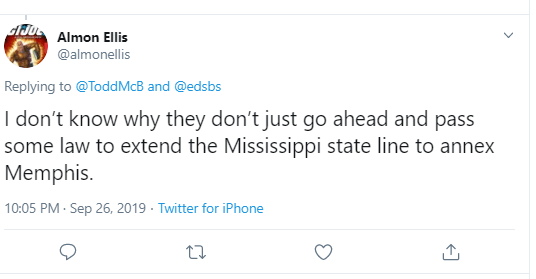
After going to law school in Knoxville for 3 years and living in Nashville for the past 20 years, I’ve heard all the criticisms that the rest of Tennessee has about Memphis. But, what they don’t realize is that Memphis doesn’t care about what the rest of the state thinks. Memphis sees itself as its own state, identifying more with western Arkansas and northern Mississippi.

All those “let’s give Memphis to Mississippi and Arkansas” jokes? Sounds good to most Memphis people.

So, it’s no surprise that I share Memphis’ civic pride about Bluff City Law, a legal drama set in (and actually filmed in) Memphis. If you follow the live tweets, you’ll see all types of Memphians recognizing the filming locations, spotting locals as extras, and deliberating the authenticity when Jimmie Smits declares “I grew up in South Memphis!” as he beats a guy up. (Note: The consensus is that this is fine.)

The Commercial Appeal does a regular episode recap, which can be found here. One of my favorite writers, Chris Herrington, does a recap for the Daily Memphian, and here’s his Episode 2 recap.

I’ll save you a full recap, but I thought it was a bit “on the nose” to have one of the legal subplots involve a inter-family dispute over a generations old barbecue sauce recipe. I mean, c’mon, a lawsuit over barbecue in Memphis?

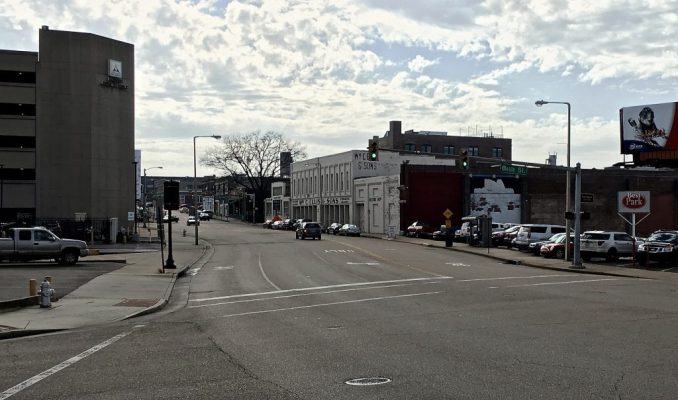
But, my skepticism was won over later in the episode, when the (now) demolished ruins of the Wm. C. Ellis & Sons Ironworks and Machine Shop ended up being a critical plot piece.

This is unintentionally timely, since–just last week–the Tennessee Court of Appeals issued an opinion related to ongoing legal issues arising from the 2017 sale of that historic Memphis site, which is being developed into a Live/Work/Play area called One Beale. (Obviously, the TV show did not delve into the probate and guardianship issues that the Court of Appeals did. I consider that a smart plot decision.)

But, regardless, I enjoyed seeing the show incorporate the actual streets of Memphis into their plot lines.

Other items of note from the episode:

  • I appreciated that the lawyers took such good care to protect their ties while eating the messy ribs. One tucked his tie into his dress shirt (the northerner); the other flipped it over his shoulder (the Memphian). Personally, I avoid eating ribs altogether when wearing a tie, but I feel like flipping the tie over your shoulder is a more “Memphis” move. It’s less pretentious.
  • Given the high rates of Bankruptcy filings in Memphis, I think the lawyers trying to stop the farm foreclosure would have just gone to 200 Jefferson Street (i.e. the United States Bankruptcy Court for the Western District) and filed a Chapter 12 (which occurs fairly frequently in that district), rather than commandeering a golf cart at Chickasaw Country Club and tracking down a judge to sign an emergency TRO.
  • To be clear, to all my non-lawyer friends, that is not how quickly and efficiently and hap-haphazardly the wheels of justice move.
  • Also, why are all the lawyers in the show graduates of Vanderbilt Law School?
  • When the opposing party got so mad at Jimmy Smits, I loved that he threatened to report him to the Tennessee Bar Association. It’s strange to hear somebody talk about the TBA on NBC in primetime.
  • I remain surprised that the lawyers keep getting happy hour drinks on Beale Street, notably Rum Boogie Cafe. What, was Mud Island not open? With all the awesome dive bars in Memphis, there has got to be a better setting for these scenes. Are you really telling me that Alex’s Tavern, the P&H Cafe, or Ernestine & Hazels’ aren’t available for filming?

That’s really my biggest complaint about the show: Memphis might possibly be the most authentic place on Earth, but the show is treating the stories like they are set in [Insert City Name Here]. There’s so much grit and grind and weird and crazy and bizarre in the city of Memphis, and I would think these plots and subplots would write themselves.

I mean, one of the perennial candidates for Mayor of Memphis (Prince Mongo), claims that he’s an alien from outer space (Zambodia, to be exact). The most famous nightspot is a downtown disco, run by a cape wearing DJ with a checkered past who preached no discrimination in between Prince songs, sirens, and blasts from a smoke machine (RIP Raiford).

There’s just so much extra in Memphis, and I hope the writers and show runners get to a comfortable place where they can explore those facets of the city that can really differentiate this TV show from the regular, been-there-done-that legal drama.

Just last week, I saw a great tweet during the Memphis Tigers and Navy football game, when the ESPN cameras caught some Memphis fans, wearing an incredibly authentic Memphis t-shirt, enjoying the Memphis victory and maybe a little bit too much. In response:

How is Memphis a real place that exists? Whenever I take friends out and show them my favorite places in Memphis, and they interact with the great people who live there, that’s what I hear from them. In a good way.

So, Bluff City Law, I hope you find whatever that is. Have Jimmy Smits go to Gus’ World Famous Fried Chicken. Have Sydney meet with a criminal informant at Printer’s Alley. Have Della (the probate lawyer) represent one of the Ellis heirs in the guardianship dispute.

Text Messages Can Create an Enforceable Contract for the Sale of Land in Tennessee

In Tennessee, an agreement for the sale of land must be in writing in order to be enforceable, pursuant to Tennessee’s version of the Statute of Frauds. Specifically, pursuant to Tenn. Code Ann. § 29-2-101(a)(4), the agreement “shall be in writing, and signed by the party to be charged therewith…”

downloadSo, of course that includes your typical sale contract that is signed by both buyer and seller.

But, what about e-mails back and forth? What about text messages? Well, it depends.

Last week, the Tennessee Court of Appeals issued an opinion that suggests that text messages could work, provided that all elements of a binding, enforceable contract otherwise exist.  This case is Gatlin v. Scott, M201802293COAR3CV, 2019 WL 4567497, at *3 (Tenn. App. Sept. 20, 2019).

As we all know, a contract–whether written or oral–“must result from a meeting of the minds of the parties in mutual assent to the terms, must be based upon a sufficient consideration, free from fraud or undue influence, not against public policy and sufficiently definite to be enforced.” Higgins v. Oil, Chem. and Atomic Workers Int’l Union, 811 S.W.2d 875, 879 (Tenn. 1991).

No matter what the medium, there must be a clear showing of offer and acceptance and definite/specific terms. If you’ve got that, then a notes on a paper napkin, e-mails, and, yes, text messages might work.

In this new case, the issue wasn’t that the contract would be made up of text messages; the issue was that the text messages did not clearly show mutual assent to the terms.

The critical issue was that, when buyer presented his specific sale terms via text, his text concluded with this line: “Please let me know if you want to move forward and I’ll get a contract to you.” The seller responded: “We will gladly accept your offer.”

Is that an offer and acceptance?

The Court ultimately concluded that “[t]he circumstances presented here show that the agreement was a preliminary negotiation and not a final agreement to which either party intended to be bound.”

The fact that a sale contract was referenced–but never signed–was the deal breaker.

This was the exact issue facing Chancellor Bill Young in Davidson County, when an aggrieved buyer sued Gibson Guitar to force the sale of the Valley Arts Building on Church Street in early 2018. There, Somera argued that a chain of e-mails between it and Gibson created a binding contract; in response, Gibson argued that Somera’s emails expressly stated that the terms would be memorialized into a sale contract, which was never signed by Somera’s deadline, and that’s when Gibson signed an actual contract with a third party buyer.

This consistent with recent cases in other states, and a good discussion of those cases can be found at this blog post by Best Practices Construction Law and the Massachusetts Real Estate Blog.


Res Judicata Part 2: What about Bankruptcy Court?

Remember a few months ago, when I talked about the concept of res judicata in Tennessee and how, in some situations, a smart plaintiff will include all relevant causes of action in its initial action? That way, the plaintiff may be able to avoid re-litigating similar issues later.

In that post, I noted that it can be a critical issue in bankruptcy cases, where a state court judgment for fraud can potentially fast-track a non-dischargeability finding under 11 U.S.C. Sec. 523.

Specifically, to do that, the plaintiff needs to plead specific facts and causes of action that would satisfy the elements of 11 U.S.C. Sec. 523 (but in the state court proceeding). In order to convince the bankruptcy courts, however, to apply issue preclusion, the plaintiff generally also has to actually litigate the matter, i.e. the judgment can’t have been based on a default judgment.

As a quick recap, here’s the typical checklist that a bankruptcy court may consider. Were the issues in the prior proceeding:

  • identical with those in the subsequent proceeding;
  • actually litigated;
  • necessarily decided in a final judgment on the merits; and
  • asserted against the same party or someone in privity.

The question that comes up, then, is whether a default judgment has issue preclusive effect? As you can guess from the above, in most cases, a default judgment (i.e. one that is entered solely because the defendant doesn’t respond) is not deemed to be “actually litigated.”

But, two pending cases from August 2019 suggest that courts are looking at these issues.

They are: Creech v. Viruet (In re Creech), 18-12584 (11th Cir. Aug. 7, 2019) (full copy here); the Draka v. Andrea (In re Andrea), 18-96014 (N.D. Ill. Aug. 6, 2019) (full copy here).

These are really interesting cases, and they are worth a reivew, if only to see the heightened standards that a bankruptcy court will apply in 523 actions. Which, by itself, is the primary reason so many creditors want courts to grant issue preclusive effect to default judgments.

In the end, it’s a short-circuit to avoid the relief that the Bankruptcy Code provides to debtors, so it’s a disfavored move. I’d be surprised if a default judgment will satisfy that burden.

Economic Loss Doctrine Prevents Double-Dipping in Damages

Sometimes I use this blog as a notepad for obscure legal theories that I’m going to use later.

Like this one, on the “economic loss doctrine.”

If you have a plaintiff who sues you both for breach of contract damages and for tort damages arising out of the same transaction, you may be able to get the tort claims dismissed, per a Tennessee Court of Appeals opinion released yesterday.

The case is Milan Supply Chain Solutions, Inc. v. Navistar Inc. et. al,  W201800084COAR3CV,  2019 WL 3812483 (Tenn. App. Aug. 14, 2019), and it discussed this rule, known as the “economic loss doctrine.” The theory was “created by the courts to avoid the ‘coming collision between warranty and contract on the one hand and the torts of strict liability, negligence, fraud and misrepresentation on the other’.”

The heart of the concept is stated as:

[C]ontract and tort are separate and distinct areas of the law that provide separate and distinct remedies. A party who enters into a contract which contains terms that limit recovery in the event of a breach [is] typically unable to circumvent such provisions by alleging a tort occurred as well. The warranty or contract’s terms and conditions set forth the rules governing the relationship, and tort law does not expand the remedies of the contract beyond the agreed-to terms. Absent personal injury or damage to other property, the sole remedy lies in contract.

The theory is that a party to a contract is free to contract for the terms of their purchase agreement, and this doctrine protects the right to allocate risk in a transaction.

A good “real life” example of this would be where a party limits the damages for breach in a real estate transaction, such as by providing that damages are limited to a return of the deposit to the buyer. Under this theory, the buyer would not be able to, later, subvert that contract provision by suing for damages in tort.

New Court of Appeals Opinion provides good statement of doctrine of Res Judicata

As lawyers, the business model is fairly simple: We sell our time, multiplied by our hourly rates.

This creates a huge disconnect between clients and lawyers. All clients want their matters resolved in their favor, but also quickly, smartly, and cost-efficiently (that’s a nice way to say for as little legal fees as possible). On the other hand, the lawyer-industrial-complex wants lawyers to ponder, research, litigate, bill, examine, depose, etc. (i.e. for as many billable hours as possible).

First off, run away from lawyers like that.

Second, if you’re a lawyer and want clients to be happy, you should read this new Tennessee Court of Appeals opinion, which discusses the concept of res judicata. That’s a doctrine that allows parties to avoid unnecessary, duplicative litigation, when the issues have already been decided by a court.

The facts aren’t that important, so I’ll just focus on the legal discussion.  The Court wrote: Continue reading “New Court of Appeals Opinion provides good statement of doctrine of Res Judicata”

341 Meeting: Suing Your Own Employees; Public Schools; Urgent Political Spam

Hassling Poor People, Who Happen to be Your Own Employees. When the economy hit rock bottom in 2009 or so, all kinds of doctors, lawyers, private schools hired me to collect their debts. Many had never dealt with bad debt before, or the awful circumstances that lead to defaults. They just saw the bad debt and thought it could be an income stream for them. It was an eye-opening lesson for many.

Since then, I occasionally have had to tell some of my clients that some debt isn’t worth collecting, whether it’s a low return on investment or, frankly, just bad PR.

This story out of Memphis reminds me of that.   NPR reports that Methodist Le Bonheur Hospital is making national news for its practice of suing its own employees when they can’t pay their medical bills, and then using some pretty aggressive collection tactics when they can’t pay the judgments rendered in the lawsuits.

…what is striking at Methodist, the largest hospital system in the Memphis region, is how many of the patients being sued are the hospital’s own employees. Hardly a week goes by in which Methodist workers aren’t on the court docket fighting debt lawsuits filed by their employer.

That’s a really bad look, especially in a climate where employers are criticized for not paying a living wage and also terrible health insurance benefits. Continue reading “341 Meeting: Suing Your Own Employees; Public Schools; Urgent Political Spam”

Everybody Loves “It City”: United States Supreme Court to hear dispute over land deal in The Nations in November.

The Nashville Bankruptcy Bar got some exciting news from the United States Supreme Court recently, as the Big Court granted certiorari to consider a novel issue of law: Whether an order denying a motion for relief from the automatic stay is a “final order” under 28 U.S.C. § 158(a)(1).

For you real law nerds out there, here’s a copy of the case schedule.

You’ll note that cert was granted in May 2019, and the oral argument is set for November 13, 2019. (I have no idea why this news from May 2019 is just now hitting the local news.)

But, to our local bar, this is newsworthy because the United States Supreme Court is said to grant “cert” in extremely rare circumstances, said to be less than 0.01% of matters presented to it. Continue reading “Everybody Loves “It City”: United States Supreme Court to hear dispute over land deal in The Nations in November.”

Tennessee Supreme Court provides deep analysis on elements of “novation”

The Tennessee Supreme Court issued a new opinion today, which is notable for a few different reasons.

First, it discusses a legal dispute over The Braxton, which was a luxury high-rise condo building in Ashland City, Tennessee, and which is considered by some to be one of the first big development “fails” of Great Recession Nashville.

Second, the case provides a comprehensive analysis of the law on novation.

The case is TWB Architects, Inc. v.  The Braxton, LLC  No. M2017-00423-SC-R11-CV (Tenn., July 22, 2019).

At its most basic, “novation” is when a party substitutes a new obligation for an existing obligation, such that, after the novation, the second obligation is the only legally binding remaining obligation. Continue reading “Tennessee Supreme Court provides deep analysis on elements of “novation””

Tennessee Court of Appeals shows analysis on “reasonable” attorney fees.

The Tennessee Court of Appeals issued an opinion yesterday in a collection case, which has some really useful analysis on the reasonableness of attorney’s fees. This is an issue near and dear to my heart.

A full copy of the opinion, Tennessee Farmers Cooperative v. Ted Rains,  M201801097COAR3CV, 2019 WL 3229686 (Tenn. App. July 18, 2019), can be found here.

Continue reading “Tennessee Court of Appeals shows analysis on “reasonable” attorney fees.”