The Next Frontier of Foreclosure Litigation could be over “irregular” sales.

When Tenn. Code Ann. § 35-5-117 (originally § 35-5-118) was enacted in 2010, foreclosure lawyers were terrified.

This was the first time that the Tennessee legislature limited a creditor’s collection rights after a foreclosure. And the text was pretty ambiguous.

The statute created two general scenarios where a debtor could fight efforts by a creditor to obtain a deficiency judgment after a foreclosure:

  • Where the debtor can make “a showing of fraud, collusion, misconduct, or irregularity in the sale process” (see Tenn. Code Ann. § 35-5-117(b)); or
  • Where the debtor can “prove by a preponderance of the evidence that the property sold for an amount materially less than the fair market value of property at the time of the foreclosure sale” (see Tenn. Code Ann. § 35-5-117(c)).

At the time, foreclosure attorneys focused on what “materially less” than “fair market value” meant. The legislative history of the statute revealed that the lawmakers pulled that phrase from divorce law, where a “material change in circumstances” could impact child custody decisions. (Not much guidance on foreclosure cases.)

Ultimately, the appellate courts found that 88%-90% of the last known appraisal was sufficient, with later opinions approving 80% bids. With this “mathematical” clarity, foreclosing lenders had some guidance to avoid traps under 117(c).

But what about the part we all overlooked, Tenn. Code Ann. § 35-5-117(b)? We took that part for granted because, seriously, does any lender or foreclosure attorney commit fraud, collusion, misconduct, or irregularity in the sale process?

I don’t ask this in a rhetorical way. It’s an interesting question, and, in light of customary foreclosure practices in Tennessee, I think it’s ripe for litigation.

Here’s an example, which you can try at home. Grab your local newspaper (assuming one still exists in your area), and look for the foreclosure notices. Pick the first one you see, and call the foreclosure attorney and see what happens.

In my experience, it’s likely that:

  • The attorney/staff will never answer your call/email.
  • The attorney/staff will not call/email you back.
  • If you do hear back, you will not be provided with any information other than what is in the sale notice.
  • In many situations, you will not even get confirmation whether the sale is proceeding or not.
  • There will be sale terms announced in the minutes before the sale, but those are only rarely shared with interested parties in advance. Things like: Whether buyers need to bring cash. If so, how much. When will closing happen. Whether buyers need be pre-qualified.

These are fundamental questions that any reasonable bidder would expect to be provided. If an interested party doesn’t get these answers in advance, then they simply will not show up or, if they do, will be unprepared to bid. This uncertainty and failure to communicate leaves foreclosure bidding to the low-ball bidders, who make their money by exploiting the ambiguity (and low bid prices).

The failure to respond to interested parties’ reasonable questions will chill interest in a sale and will reduce the number of potential bidders. This could rise to the level of a violation of the foreclosure trustee’s duties under the Deed of Trust and could, possibly, render the sale “irregular.”

Foreclosing lenders in Tennessee should consider subpart 117(b) and how they or their counsel handle sales. Sure, no lender thinks their sale is “irregular,” but, on the right facts, you never know how a court will rule.
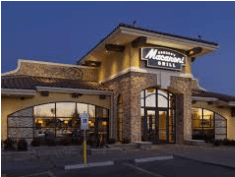
How your registered agent’s address could get you sued in their county.

Earlier this week, a lawsuit was filed in Davidson County Chancery Court by a landlord to collect $130,697.44 in unpaid rent from a Romano’s Macaroni Grill located in Rutherford County. There was no allegation that any of the facts of the case occurred in Davidson County or that the parties contractually agreed that the venue for any disputes would be in Nashville.

Should this lawsuit be dismissed for improper venue, where the business, all operations, and the leased premises were all in Rutherford County?

Not necessarily. Here’s why: All of the Defendants use corporate registered agents whose offices are based in Davidson County, and that subjects them to venue in Davidson County.

When analyzing venue for causes of action under Tenn. Code Ann. § 20-4-101(a), a defendant can be “found” in “any county wherein it has an office for the furtherance of its business activities.”

Tennessee courts have said that a registered agent’s address is an office for the furtherance of the defendant’s business activities, and it doesn’t matter that the defendant doesn’t actually operate a business out of that address or doesn’t otherwise have any other connection to that county. See Fed. Exp. v. The Am. Bicycle Grp., LLC, No. E200701483COAR9CV, 2008 WL 565687, at *3 (Tenn. Ct. App. Mar. 4, 2008).

Maybe this isn’t a big deal–most of these corporate agents are located in Davidson County, and Nashville uniformly has very strong courts and judges.

But, Tennessee is a very, very long state. It’s definitely something to keep in mind when you’re a company in Greenville or Memphis, and you’re selecting a registered agent.

Don’t Let Your Post-Foreclosure Rights Expire: Tenn. Code Ann. § 35-5-118(d) Imposes a Two Year Statute of Limitations on Deficiency Lawsuits

Last week, a local collections lawyer conceded, in open court, that collection cases rarely have interesting issues involved. This case was different, the lawyer argued, because it involved interpretation of Tenn. Code Ann. § 35-5-118(d), which has not yet been discussed in any Tennessee opinion.

This is the new foreclosure deficiency statute, and I’ve dealt with this law a few different times. Here’s a blog post about the first judicial opinion defining what constitutes a reasonable bid price at foreclosure under the statute.

I’ve also noted that the statute shortens the statute of limitations on pursuing post-foreclosure deficiency lawsuits. Specifically, the statute says:

(d)(1) Any action for a deficiency judgment under this section shall be brought not later than the earlier of:

(A) Two (2) years after the date of the trustee’s or foreclosure sale, exclusive of any period of time in which a petition for bankruptcy is pending; or

(B) The time for enforcing the indebtedness as provided for under §§ 28-1-102 and 28-2-111.

So, to collect your debt after a foreclosure, you have to act fast in Tennessee. While two years doesn’t sound like a short time frame, it can be, where the creditor spends time on eviction, selling the property, or even selling the deficiency debt to a third party.

The statute has a September 1, 2010 effective date, so the courts may still be dealing with deficiencies from both the pre-statute and post-statute time periods.

Always be on the look-out for this issue. In the “interesting” case that I mentioned above, the foreclosure occurred in February 2011, with the lawsuit filed in February 2014. In response to this issue, Plaintiff’s counsel confidently cited the general six year statute of limitations on breach of contracts (Tenn. Code Ann. § 28-3-109). The Court rightfully held that the more specific timelines of the foreclosure deficiency statute controlled and dismissed the action.

Who says collection cases aren’t interesting? We made law that day!