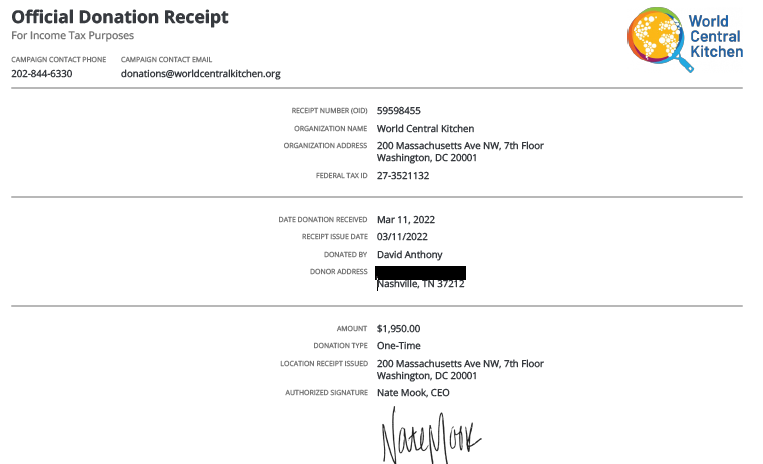
In the grand scheme of things, it’s not much, but, to my little firm, a day’s worth of revenues is a lot.
This has been a law firm fund-raising concept that I’ve pondered for a while.
With the demands and time constraints that so many lawyers face, it’s hard to make time to volunteer at Legal Aid. But, if lawyers are already sitting at our desks, why not cut out the transit time and simply donate an hour (or more) of billable time per month to a good cause?
Of course, this grand idea works best at a big firm, where one hour a month is just a blip on an individual lawyer’s hourly billables report but, at the same time, results a substantial amount of money each month when you’ve got 40-50 lawyers participating.
Get a few law firms doing this instead of the standard “sponsor a table at a dinner” contribution, and you’re talking real money going to local charities.
So, to put my money where my mouth is, I’ll continue to do this each month, supporting different charitable causes by direct cash payments representing a billable hour.
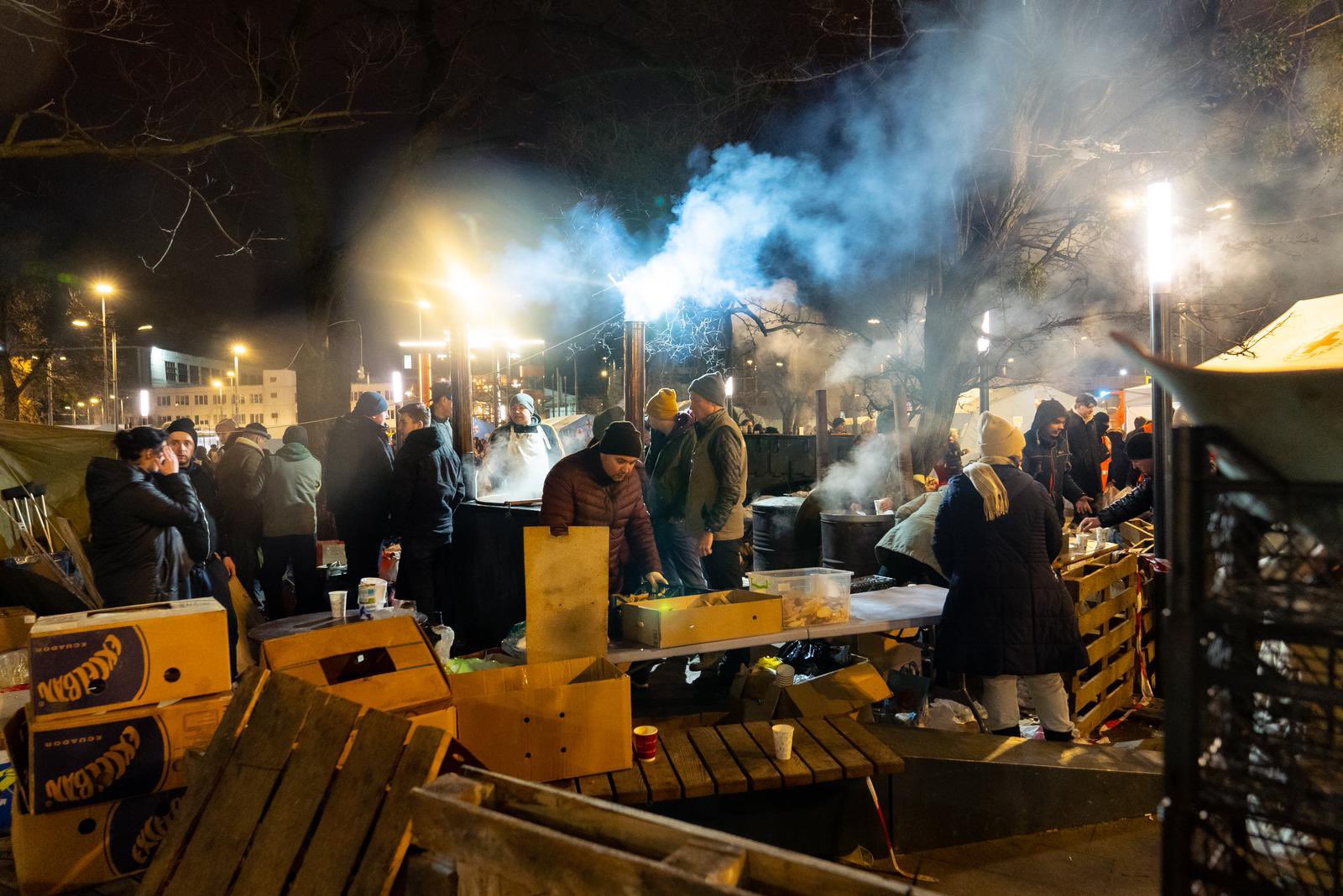
The initial decision was based on the terrible early images from the War and, in the past week, things have only gotten worse, as the Russian attack has ravaged residential areas and evacuation routes. If families are able to make it to the border, it’s only after losing everything they owned, after hard travel in the cold, and after days with no food.
You can get live updates (and inspiration about kindness and humanity) via their twitter account: @WCKitchen
The journey out of Ukraine is long & difficult—more than half a million people have fled so far. People walk for days in search of safety. In Medyka, families are greeted by volunteers who have come to help, many who are working with us to serve fresh, hot meals. #ChefsForUkrainepic.twitter.com/Ce41H9BdsE
If you do donate, please feel to let me know in the replies or comments to this post.
Note: You don’t have to be a new or an existing client to participate. Everybody is welcome to give.
After 2 days of traveling by foot & bus through Ukraine, Miroslaw's family made it across the border into Poland. They gathered a bit of strength & warmth with hot WCK meals before continuing their journey to Germany—Miroslaw's father stayed in Ukraine. #ChefsForUkrainepic.twitter.com/KAZ2FBBXxk
Before law school, I majored in English, not Political Science.
So, as I see the news about the war in Ukraine, I don’t understand the politics behind the invasion (probably because there’s no just reason for this), but I absolutely see the tragedy. The fathers saying goodbye to their families. The injured and scared kids. The destroyed houses.
I also see the bravery of the Ukrainian leaders and in the Ukrainian people. I bet there’s a hot-shot Ukrainian lawyer out there whose “to-do” list today didn’t consist of legal research, but instead defending their city from armed forces.
What would I do if that happened to my family? To my country?
Other than a few sympathetic tweets offering the typical “thoughts and prayers,” what can I do to help? I’m just a lawyer in Nashville.
Next Thursday, March 10, I’ll donate all of my billable hours from legal work to humanitarian efforts supporting Ukraine and Ukrainian refugees.
I’m a lawyer (see above), so I’m sure you all will expect some fine print.
Here goes:
I will donate all billable hours, but don’t forget that I’m a small shop (so don’t expect a 24 hour day–I also do the IT and bookkeeping)
I’ll show my math, though, and I will post both the final tally at the end of the day, as well as the receipt for the donation (to be made on March 11)
I haven’t yet decided on the organization, but I’m open to suggestions for worthy organizations (my children and I are going to vote) (Edited: We are supporting World Central Kitchen)
If you’re a new or existing client who would like me to work on your file specifically on March 10, let me know
If you’re a lawyer or law firm who wants to out-donate me, you are welcome (and encouraged) to steal this idea
That last point is important.
I have the privilege and the luxury to donate my entire day to this cause. Some big law firms may not want donate 100% of the day. But can you imagine if some of Nashville’s largest law firms donated just one hour of each lawyer’s billable hours on March 10 to this?
As an aside, I also hear the skepticism about the Western world’s support for Ukraine, when there’s been an absence of similar responses for black and brown people facing similar crises. I also don’t know the answer for that, but I agree.
So, assuming this isn’t a massive failure and doesn’t send me into bankruptcy, let’s plan to do this again next month, on April 13, to help Syrian refugees.
What a time for Nashville’s curbside recycling to get disrupted. I’m not sure I bought any Christmas gifts in-person this season. Instead, I relied on Santa’s elves, dressed in FedEx and UPS uniforms, to deliver the gifts in cardboard boxes.
It’s something I’ve been doing since March 2020, when COVID first disrupted everything.
Red River alleges that the COVID pandemic resulted in more residential waste (and less commercial waste), putting additional burden on Red River (which serviced the residential waste, but generally not the commercial). This resulted in more employee costs and additional wear-and-tear on Red River’s equipment and vehicles. The goals of the bankruptcy are to restructure debt and, possibly, sell the business in parts.
In today’s Axios Nashville newsletter, they report that Nashville “is waiting for the bankruptcy court to determine what happens to its contract, and it’s possible Metro will be allowed to search for a new trash collector.” Well, sort of.
Based on my review of the docket, Nashville has hired a local Texas lawyer, but the real shots are probably being called by the Nashville law firm Bass Berry Sims, which was allowed to appear on behalf of the city “pro hac vice” (which means that an out of town lawyer who is otherwise not licensed in a jurisdiction can appear in a case).
After the entry of that Order on November 29, 2021, Nashville hasn’t filed anything to formally press Red River as to whether it will assume or reject the waste services contract. Instead, my guess is that the city’s very competent counsel are in negotiations behind-the-scenes for Red River to decide whether it can continue to provide the services or whether it’s going to walk away from its obligations.
So far, only one party is really pressing this issue. In its contract, Fort Wayne, Indiana required Red River to enter into a $4,900,000 performance bond and took affirmative steps to make sure that bond was renewed. Fort Wayne issued a default under the bond on December 8, 2021, asking for $1,718,569 in damages for missed collections. On December 14, attorneys for the bonding company filed an Emergency Motion to force “the Debtor to immediately assume or reject the Solid Waste Contract.”
Despite initially being set for December 23, this Emergency Motion has been taken off the docket indefinitely. In the Motion, the insurance agency references testimony showing that many of the municipalities that held bonds allowed them to expire (not Fort Wayne, though).
The next round of hearings in the case are set on January 7, 2022, when Red River will ask the Bankruptcy Court to grant a number of procedural and administrative orders. This includes: the ability to use “cash collateral” (i.e. spend money that a secured lender otherwise has the ability seize and retain); to grant its secured lender (probably the same one holding the cash collateral) a “superpriority” lien on post-bankruptcy assets; to hire all the bankruptcy-related attorneys and professionals; and to set the system by which all of those attorneys and professionals get paid.
And, of course, the orders approving the debtor’s attorneys’ employment and fees will be a big part of getting this case moving. And, wow, bankruptcy lawyers aren’t cheap: Red River’s primary counsel are to be paid hourly rates of $800 (Partner) and $575 and $450 (Associates).
My guess is that, until Red River gets (forces?) its lenders to agree to release its cash for use in business operations (and to fund the bankruptcy), Red River can’t meaningfully determine whether it can assume or reject the contracts. The hearings this Friday will be step one in that process.
As an aside, it bodes poorly that it has taken this long for the debtor to get these administrative motions approved. These are generally referred to as “first day” motions and, yes, they are generally considered and approved early in a case.
Aside from that, Red River will also have to show some ability to actually service the contracts in order to retain those contracts. A big part of chapter 11 bankruptcy is the ability to retain (and assume) the good contracts and reject (and walk away from) the bad contracts. Then, the “reorganized” debtor can either continue to perform the profitable contracts or, if it so choses, “sell” those contracts to somebody else.
Here, if Red River isn’t able to perform or provide a reasonable basis to believe it can perform under the Nashville contract, there will be cause for the city to ask the Bankruptcy Court to force it to decide. The fact that Red River isn’t currently servicing these contracts doesn’t make me feel optimistic about their chances.
The longer my cardboard boxes sit behind my house may be the best indication of where it’s all headed. I’ll update this post when I can see the pile over my fence.
A few of you asked if there was a corresponding drop in Chancery, Circuit, and General Sessions filings. Maybe that’s why people weren’t running to file bankruptcy.
Given the numbers in Bankruptcy Court, it’d make sense that state court litigation might have also slowed down, but I was a bit surprised by the answer.
Davidson County Chancery Court lawsuits have been surprisingly consistent.The final Chancery lawsuit of 2021 was filed at 11:59AM on December 30. It was case number 21-1324-I, which means that it was the 1,324th case filed last year. It’s an unpaid commercial debt lawsuit.
For comparison, here are the last few years’ numbers on new case filings: 1,299 cases filed in 2020; 1,569 in 2019; 1,413 in 2018; and 1,386 in 2017.
In short, there was no real drop in chancery court litigation, which surprised me. 2021 felt like a slow litigation year for Nashville.
Of the ten stories featured in the Nashville Post’s 2021 “Top Reads: Legal” article, six of them were just about law firm personnel moves not, you know, actual news-worthy litigation.
In general, you’d expect to see the business-minded Chancery Court have cases on this list, but, frankly, it’s a bit boring (no offense, toilet fire lawsuit).
What about General Sessions Cases? This is where it gets more interesting.
As of the end of November, there were 6,551 detainer / eviction warrants filed in 2021, along with 15,404 small claims lawsuits filed. For that same period (end of November) in 2019, there were 10,694 eviction lawsuits and 24,508 small claims lawsuits filed. Long story short, that’s about a 40% drop in filings.
Circuit Court? By the end of November, there had been 1,736 new civil lawsuits filed in 2021. At the end of November 2019, there had been 2,590 civil lawsuits filed, representing a 33% drop.
I’m not entirely sure what to make of this data. A 40% drop in evictions and credit card/debt collection cases would certainly be expected to result in a slower pace of new bankruptcy filings, but, nevertheless, this also shows that the common perception that “courts are closed” and “evictions aren’t happening” is incorrect.
Some credit has to be given to the LEGACY Housing Resource Diversionary Court run by Davidson County Judge Rachel Bell. This program can’t stop the new eviction filings, but it has helped many pending cases get resolved. As of September 20, 2021, $18,799,705.71 had been paid to landlords via this program and, most likely, kept those tenants out of the bankruptcy lawyers’ offices.
In the end, my take is that Middle Tennessee bankruptcy filing numbers are far more impacted by lawsuits filed in Davidson County General Sessions Courts than by the business-litigation dockets in Chancery Court. These numbers offer some part of an explanation.
A few days ago, a lawyer from Oklahoma City called to refer me a new case, and, at the end of the call, he asked “Is anybody filing bankruptcy in Nashville? There’s just nothing going on here. Are you hearing anything about when it’s coming back?”
It’s a conversation I’ve had about 100 times over the last year, especially with local bankruptcy lawyers.
As of this moment (December 29), there have been 3,923 debtor bankruptcy cases filed in the Middle District of Tennessee in 2021. Compare that with 2011, when 12,546 debtor bankruptcy cases were filed. How on earth, in this economy and in month 21 of a global pandemic, has there been less than a third of the new cases we saw a decade ago?
For reference, here are the numbers for the past decade (plus):
2021: 3,923
2020: 5,616
2019: 8,263
2018: 8,577
2017: 8,710
2016: 9,198
2015: 9,290
2014: 10,089
2013: 10,092
2012: 11,827
2011: 12,546
2010: 14,063
2009: 14,940
It’s clear that 2021 brought a historically low number of new bankruptcy case filings. It also shows that the Middle Tennesseans aren’t necessarily disinclined to file bankruptcy (or unable to, since so many of the past filers are not time-barred or ineligible under 11 USC § 109 or otherwise). So, why aren’t more people and businesses filing bankruptcy?
Some people refer to the influx of federal relief money and high wages, but I’m not seeing many debtors doing financially better now than they were in years past. 2021 appears to be as big a financial struggle as any of those years before it.
My guess is that the federal and local moratoriums on foreclosures and evictions are a big factor, since so many potential debtors aren’t being forced into a filing to save a imminent threat to their home. For many residential and commercial lenders, even though the moratorium may not apply to their loan, the creditor is nevertheless taking no action, for a number of reasons.
From all over the creditor realm, I have heard for months to mark my calendar for “January 1, 2022,” which was when many of the “big” lenders were planning to turn the foreclosure machine back on. Of course, that was before this latest COVID variant completely reshaped the status quo.
I’d guess that the January 1 date is being moved farther out, especially since we’re back in the throes of an ever-evolving pandemic. While it’s impossible to predict what COVID has in store for us, it’s easy to see that all of the same factors and circumstances are present to keep mortgage lenders at bay.
As awful as it sounds, then, we won’t see more bankruptcy filings until–strangely–the economy gets back to normal and people return to regular life (which, if you ignore my prediction that filings would spike in June 2020, is basically what I said in this old post).
I really love my office space, but I don’t talk about it much.
I have space in a brand new building, right off Music Row. The office has every modern amenity you can dream of. Free wireless internet and utilities. 10 conference rooms, all set up for hi-tech video and audio. A variety of free coffee and drinks, in a modern and luxuriously decorated common area. Three full time staff to welcome guests, handle packages, and greet me in the morning. An outdoor patio that overlooks midtown Nashville. A few times a week, the landlord throws a party with free drinks, cookies, and networking with the other tenants.
My office is in the Midtown Nashville WeWork, and, for a long time, I was worried that Big Fancy Lawyers did not have offices at flexible office spaces.
Why’d I think that?
In general, The Law is a profession governed by tradition and slow to embrace innovation.
Ask most managing partners, and you’ll find a distinct preference toward the “Ways Things Have Always Been Done.” With that mindset, then, the typical law firm office features fancy marble foyers, libraries with leather bound books, and spacious corner offices where the partners can enjoy a whiskey drink at 9pm (when all the associates are starting to leave for the day).
I’m exaggerating a bit, but it remains a world where a lawyer’s self-worth is often defined by the comparative size of his or her office.
This summer, at our neighborhood swimming pool, I was talking to a Big Law Firm lawyer, who was a little bitter about a large group of lawyers leaving her law firm to start the local branch of a Giant Law Firm.
You know what her most damning insult about the new venture was? “I heard their offices are in a co-working space.”
The suggestion being, of course, that, unless you have way too much space in a way too expensive building on a way too long lease, well, what’s the point?
Oh no lawyers have figured out that prestige is a scam how on earth will our profession survive pic.twitter.com/iL3H5bA3aO
For decades, law firms have focused on opulent physical spaces to suggest, indirectly, success and prestige, which they hope will result in more work from clients.
Hopefully, the newer generation of lawyers (and cost-conscious clients) will see all this for what it is and realize that the best way to impress clients is high-value, efficient billing and timely, good work.
Maybe COVID-19 and the success of working-from-home will be a watershed moment for the profession, with so many lawyers abandoning skyscrapers for our guest bedrooms. We won’t stay at home forever, of course, but will it be so easy to return to the Old Way, now that we’ve seen that billable hours aren’t necessarily worth more from the 26th Floor?
I’m not holding out hope. A few months ago, the Nashville Bar Association presented a “Future of Commercial Real Estate” seminar, which was held at a Big Law Firm’s brand new office spaces, in the most expensive building in town.
Maybe old habits are hard to break.
For me, when I left my Old Big Law Firm, I talked to my commercial broker clients about finding office space, and the conversations were always about 5 or 7 year leases, for a new venture that I had no idea where it would take me (and, boy-oh-boy, has it ever taken me a bunch of places).
I needed something flexible and that would facilitate my work, but that wouldn’t force me to work more just to pay my monthly rent.
My office set-up has been good for me. It’s a gorgeous space, with every amenity I need, and I have the ability to grow or to shut it all down, without navigating the intricacies of a 7 year lease.
Also, I’m neighbors with Amazon, ML Rose, Bethel College, and dozens of tech companies whose names I can’t pronounce.
I can’t say enough positive things about my space. I’d say more, but, as I’ve been typing this, I got Katie’s email about the Christmas gift wrapping/hot cocoa party…
In the depths of the COVID-19 pandemic in June 2020, I bought a truck. And not just any truck, but a brand new 4×4 that was way bigger than the late model Nissan Leaf that I traded in.
When we returned to a semblance of normal life in the spring of 2021 (i.e. when Courts began to require in-person appearances), I realized how much I hated driving a truck on downtown streets.
Well, the actual realization occurred at the top level of the Williamson County Judicial Center parking lot, when there were no parking spots and I had to turn my giant truck around in a tight space and find street parking. I’ll yada yada the parts about me backing into a tree while parallel parking a few minutes later and, by the end of the day, getting a Carvana purchase offer.
But, long story short, Carvana gave me a no-questions/no-fuss offer on my (fixed) truck, in a process that was weirdly easy. I was used to having to run a newspaper ad and have strangers come to my house for test drives (or, worse, dealing with a used car salesman).
That’s their business model–disrupt the traditional market by making an onerous process so easy.
Which is exactly what Zillow was doing in real estate, and which ended in failure.
But don’t think that Zillow’s failure is an indictment of the business model. It’s alive and well in the Nashville market.
When I look at the recent property transactions in the Nashville Ledger, all I see are weird LLCs, buying lots and lots of properties. Look at the picture below. Sfr Xii Nashville Owner 1 LP. Opendoor Property Trust I. Mile High Borrower 1 Value LLC.
My personal favorite is the buyer named “Rich af LLC,” the new owner of some prime real estate on 1st Avenue.
The business model is straight-forward. These buyers approach owners with a quick, no-fuss, cash offer, and, then, they hope to flip the properties (after renovations or maybe not), safe in the assumption that the Nashville real estate market is going to justify their confidence.
Zillow’s failure drew a lot of national attention, but, if the past 60 days of transactions are any indication, the business model is alive and well in Middle Tennessee. In fact, Zillow’s crash and burn appears to be good for Nashville property investors–not only is there one less competitor, but there’s an assumption (among property owners) that “buying low/selling high” isn’t a viable business, and they’re lucky to get quick-cash offers on their properties.
When Carvana offered me nearly 95% of retail value for my 10 month old truck, I was surprised (and couldn’t get it there fast enough). I kept waiting to find out what the catch was–would there be some secondary negotiation or some other trick? (There wasn’t.)
I suspect Carvana was confident that they’d easily find a buyer in a great selling market, and I’m betting that’s what these Nashville property investors are doing too.
For the past 6 months, I’ve served as an editor for the Nashville Bar Association’s Notable Trial Court Opinion newsletter.
The purpose of this publication is to find interesting, novel, and useful opinions from the District Courts in the Middle District of Tennessee and from the trial courts in Davidson County, Tennessee. Specifically, my job is to review and write about the opinions from the Davidson County Circuit Court and Chancery Court Judges.
Sure, we all know that the Tennessee Supreme Court and the Tennessee Court of Appeals are the standard bearers in defining “what the law is” in Tennessee.
But, having said that, the trial courts are the first (and sometimes only) place that weird and first-impression issues in Tennessee law are examined, and seeing specific instances of how the trial courts are interpreting statutes and case precedent is critical for Tennessee litigators.
Most court rulings never get appealed, and, without a project like this, Middle Tennessee lawyers miss out on most of the good decisions that are relevant to their practices. The goal of this project is to find those opinions and share them with members of the bar.
We’re on the second edition, and a number of you have asked to see actual copies of a few of the underlying opinions.
The first case is Nissan North America, Inc. v. West Covina Nissan, LLC, et. al., Davidson County Chancery Court Case No. 16-883-BC. Memorandum and Order Excusing [Witness] from In-Person Attendance at Trial entered July 1, 2021. This case is notable because it provides a useful blueprint of the factors that a Tennessee court will consider when faced with a request to allow remote testimony under Tenn. R. Civ. P. Rule 43.01.
Another case that was featured is Robert L. Baker, et. al. v. Brett Eldredge, et. al., Davidson County Chancery Court Case No. 20-445-III. Memorandum and Final Order Granting Defendants’ Motion for Summary Judgment; Denying Plaintiff’s Motion for Summary Judgment; and Dismissing Case with Prejudice entered on December 23, 2020. A number of you have asked for a copy of this case, which is a cautionary tale about how one party can modify an at-will contract by unilateral performance, where the other party fails to object to the non-conforming performance.
As you can see from the September 2021 edition, these are just a small sample of the cases we discuss, but these are the two cases that I’ve had a number of requests to post.
And, as always, if you see a trial court decision that’s really good, please send it my way.
This isn’t going to turn into a real estate listing blog, but a number of you have asked me to keep you posted when I set interesting properties for sale.
Well, I’ve got an interesting one coming up for a Williamson County residential property in Concord Hunt (a very nice neighborhood) that will be sold on November 4, 2021.
Per the Zillow information, the house was built in 2005, is in a phenomenal school district, and, based on my site visit, is vacant.
My bank client is the second priority lien holder. This is a “judicial foreclosure” because the third-priority lien holder is the United States government. As a result, any sale will be subject to the approval and confirmation of the Williamson County Chancery Court. Per my Sale Order, I’ll handle getting the sale approved.
The sale will occur on Thursday, November 4, 2021 at 11:00 o’clock a.m., at the property address.
Please let me know if you would like additional information on this property. I am the attorney for the creditor, and, as a result, I will be limited in what information and guidance that I can provide, but I am available to answer questions about the judicial foreclosure sale and the court approval process. Nothing in this post, of course, is designed to give you legal or factual advice about these sales.
As with all distressed real estate sales, buyer beware, and hire a lawyer.