This is awesome, right? What perfect timing for this money in an economic crisis?
But, later, the article mentions that the state is just sitting on the money, with no clear plan in sight to use it to help people. In fact, the fund serves a smaller number of households in 2020 than it did in 2019. Some good news is that, maybe next year, the state will decide what to do with all this money.
Until then, though, I want to tell you about somebody who is doing something to help. She’s Samaria Leach, and she created the Window of Love.
It all started with a Facebook post on March 16, when she realized that the Metro school shut-down meant that there’d be no school lunches for the kids in her North Nashville neighborhood. That school lunch might be the only consistent source of food for some kids. So, from her own pantry, she put together food boxes, which she’d distribute out of her window a few days a week.
At first, she fed 25-35 hungry kids from her neighborhood with food from her own pantry.
Now, 8 months later, she’s still feeding hungry kids, but the number has tripled.
If the state we live in isn’t going to help our kids, maybe we have to be like Samaria and recognize that we have to look out for each other sometimes.
I can help the Nashville Bar Association make our legal community better. The reason I donate so much of my time to the NBA is that I care about making Nashville a better place to practice law. Plus, after 21 years of practice, I’ve got pretty strong opinions and a unique perspective, drawn from a robust practice in so many different courts.
I mean, seriously, do any the other nominees recognize the historic significance of this staircase?
A much-needed and historic move for the Davidson County Justice System.
It’s not incorrect to say that the Lawyers’ Association for Women has made me their “highest endorsed candidate.”
I stand up for what I care about. When I left Bone McAllester, one of the IT staff members told me, “David, you are one of the realest people I’ve ever met.” It was the best compliment I’ve received in years. Don’t we all want to be seen as authentic and honest about the way we act and communicate?
If you read this blog, you know I’m not afraid to say what I think, and that’s how I’d approach this board service. To make real change, you have to identify clear goals and use your voice to take a stand. For me, this isn’t about resume-padding or networking, it’s about finding ways to make our legal community an easier and better place to practice.
A few months ago, I started my own boutique law firm (more on that–a lot more–in a later post). With COVID and all the changes in my own practice, I had considered declining the nomination. Was this this best time to take on this task?
In the end, though, I decided that this is a perfect time. With all the uncertainty from COVID, rapid technological advances, and fundamental changes in the way we work, what an awesome time to be part of the local bar’s leadership. Plus, as one of the only nominees at a small/solo firm, who else would speak for me on the Board?
Today marks the 8 month mark of when, basically, people started taking COVID seriously.
On March 10, 2020, I had travelled to Louisville and was staying at the gorgeous and totally empty Omni Hotel, to interview for the open Louisville Bankruptcy Judgeship. That was on a Tuesday, and, on Saturday, my family was scheduled to depart for a spring break Disney Cruise.
(Spoiler-alert: Neither the job nor the cruise happened.)
In fact, on the drive back to Nashville, I coordinated my wife buying $400 of frozen pizzas and toilet paper, and I pondered stopping at Gander Mountain in Bowling Green to buy pre-apocalypse weapons and ammo.
(Spoiler-alert: The pizzas and toilet paper did happen, but the Anthony armory remains stocked only with hand-to-hand combat accessories.)
Many years ago, I got a call from a bank attorney who was in the middle of a 4 day trial in Williamson County. It was a lawsuit by a bank to collect its post-foreclosure deficiency balance. The lawyer called me to tell me that the debtor’s attorney had printed out my very own blog post and had introduced it into evidence as a learned treatise under Tennessee Rule of Evidence 618 in order to cross-exam the bank’s expert witness.
While I was flattered (my initial reaction was to ask if the Chancellor was impressed), it was also strange–given my long allegiance to banks and creditors in litigation–that Creditor Rights 101 would be used against a bank. (Also, that debtor’s counsel must have been desperate if he resorted to using my blog post as his Exhibit 15).
Regardless, man-o-man, beware of using this law blog as learned evidence of anything, because I can be really wrong sometimes.
It didn’t happen. Not even close. Literally, the opposite happened.
As of today, October 29, 2020, there have been 4,820 bankruptcy cases filed in the Middle District of Tennessee. That sounds like a lot, but, for comparison’s sake, consider that the 4,820th case was filed on the following dates over the past decade: July 30, 2019; July 20, 2018; July 18, 2017; July 6, 2016; July 15, 2015; June 17, 2014; May 31, 2013; May 23, 2012; May 11, 2011; and May 4, 2010.
Not only are we not hitting a record high, but, instead, new bankruptcies are being filed at a record low pace.
So, today’s news brings more predictions (but, this time, far less bold) via this American Bankruptcy Institute story, which predicts that the new bankruptcies are coming…in 2021.
“As stimulus checks and other forms of temporary relief run out, experts are projecting an increase in personal bankruptcy filings, which have so far been muted during the coronavirus pandemic,” the Wall Street Journal reports. “Only a new stimulus program targeting individuals or government actions forgiving or deferring student loans can keep individual filings from rising.”
In light of all this, I’m not making more predictions, because these are unpredictable times. Our General Sessions Court shuts down evictions and collections dockets, then re-opens them, then drastically limits them, and then reopened them again. People are afraid to leave their houses. Banks are afraid to foreclose on those houses. Lawyers are afraid to go to their offices.
The bankruptcies are coming. But who knows when.
Finally, to all you crafty debtor lawyers out there: I can edit any these blog posts on a moment’s notice.
As of last Thursday, the next available civil hearing date for new and pending cases was December 9, 2020.
Since last Thursday, 357 new cases have been filed in Sessions Court.
Given the usual holiday court schedule, I’d bet that–as of this blog post— there are no more open civil dockets in 2020.
The Nashville Bar Association hosted a General Sessions Court Town Hall today to talk about these issues, but, given the unprecedented nature of this problem, nobody knows what’s next and how to solve it. Will there be afternoon dockets? Staggered morning dockets? Video appearances?
I’ve received a handful of calls from local lawyers, for advice on how to navigate all this. In some cases, the best move is to file the matter and just get a date locked down before things get worse (even if it’s in mid-January).
Another option, though, if you aren’t going to get into Court until January or February, is to file your commercial eviction lawsuits in Circuit Court (which has jurisdiction, per Tenn. Code Ann. § 29-18-108).
If you file an eviction action in Circuit, today, and get it served this week, you may be able to get a judgment by early December (or early January).
And, yes, I know I’ve criticized lawyers for filing Sessions-sized and eviction matters in Circuit Court (a move that generally presents no tangible strategic advantage, other than the lawyers get more billable hours).
But these unprecedented times call for novel ideas.
This is generally an in-person event at the TBA headquarters in downtown Nashville, but, this year, it’ll be entirely online (for obvious reasons).
I’m the Chair of the TBA’s Creditors Section for 2020, and it was my job to recruit all the speakers and create the sessions. The online format really made for some fun choices, including finding speakers who otherwise wouldn’t be available to speak at a live event in Nashville.
We’ve got a Judge from Shelby County. A digital media specialist from Atlanta. A bankruptcy debtor’s lawyer from Jackson. A former creditor lawyer turned tech guru from Memphis. And, to everybody’s surprise–a creditor lawyer from California! (Note: Nobody even knew that California had creditor lawyers; we all assumed that they only had different levels of debtor focused lawyers.)
In all seriousness, it’ll be a great program. Topics include:
“A Creditor’s Rights: Top Issues and Common Mistakes From the Judge’s Perspective” by Hon. Phyllis Gardner, Hon. Lynda Jones and moderated by Kara Reese.
“The Future of Collections and Bankruptcy in the New Recession” by Monique Jewett-Brewster, Tracy L. Schweitzer and Jerome Teel, Jr.
“Legal Technology Update: Zoom, Slack, and Other Things You Never Realized You Need” by Zack Glaser, Lori Gonzalez and Kim Bennett.
And, remember, your Tennessee Bar Association membership includes 3 free CLE credits, so, basically, this will be free for you all. Thank me later!
But, early in the COVID crisis, the email started running stories about law firm pay cuts in Tennessee, with mentions of specific law firms. Yeah, it’s legal news, but it also felt like it was none of my business.
Plus, it led to two things: (1) Local lawyers started gossiping about other law firms’ financial stability (which was a terrible look, considering people lost jobs); and (2) Other law firms who really, really needed to take a hard look at their financial decisions and consider smart cuts may have elected to do nothing, in order to stay out of the news. Lose / Lose, right?
This is probably the Bankruptcy Lawyer in me talking, but a few financial adjustments made on the precipice of the biggest economic crisis of our era shouldn’t be considered a bad thing. Trust me, the law firms I’d be most worried about right now are the ones who haven’t changed their financial model at all.
In other questionable financial planning news… During the COVID crisis, I bought a boat.
My debtor bankruptcy lawyer friends tell me that an ill-advised boat purchase is Step 3 in a five-step process for a potential bankruptcy filing. Great news for the Anthony household, right?
All of these are spot on. In the past month, I’ve participated in 2 – 3 video hearings, and I’ve seen pant-less people and also background art that I would describe as “tasteful nude ballerina” art.
Yes, I dreamed of being a judge. Yes, I’m from Memphis and love Memphis. Yes, I’m an award winning Best of Bar, Super Lawyer, Best Lawyers in America Bankruptcy Lawyer.
That would be an awesome job, in a community that has an incredibly large volume of financially distressed consumer debtors who really, really need a smart, progressive, creative judge. Talk about a place where a civic- and policy-minded judge can really make a difference and change lives…
But, it’s not going to be me.
Some of you may know this, but I was invited to interview in December 2019 with the Merit Selection Panel in Memphis for Judge Paulette Delk’s recent bankruptcy judgeship vacancy. The interview–to put it lightly–discouraged me from submitting my name for another vacancy so soon. (And, side note, I’ve already switched jobs recently.)
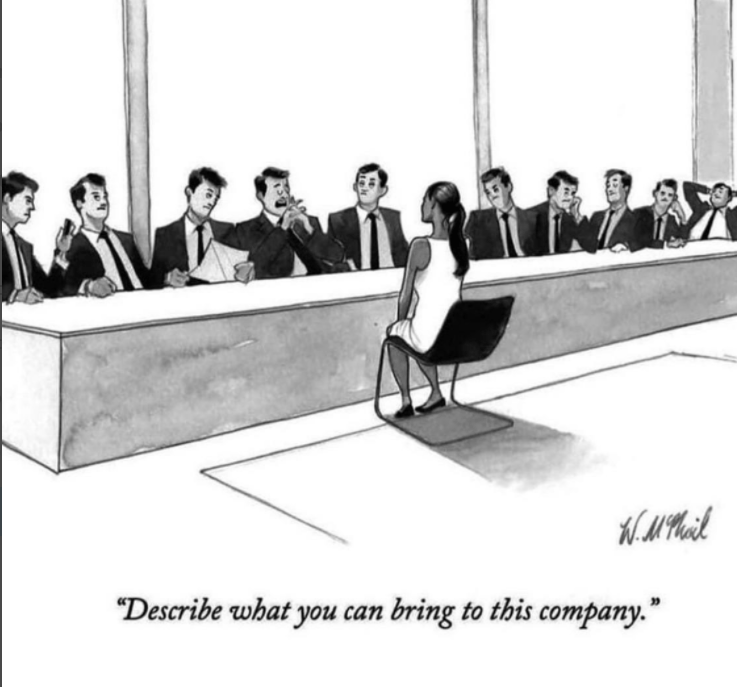
Judicial Diversity Matters. There were probably dozens and dozens of reasons I didn’t make the final round (and the ultimate pick was an absolute home run). But, based on the content and vigor of the questions to me, I discerned that, maybe, a white male (and, also, from Nashville) wasn’t their first choice (or choices 2 through 5, either, for that matter).
And, if true, they were absolutely correct (though I still question the “vigor” with which the questions were presented to me–yikes). Long before my interview, I’d been talking about the lack of judicial diversity.
We live in a time of monumental awareness of these issues, but our judiciary doesn’t always reflect the diversity of the communities that it serves. If we’re going to seize this moment and truly work for equality and true representation, isn’t this something that we should always factor into decisions?
When people have the power to hire, grant partnership, or appoint to a position, isn’t that a better consideration than “His dad is friends with _______” or “He goes to the same church that I do” or “He is an ‘opportunistic’ hire”? That’s called “affinity” hiring. Don’t do that.
I’ll go one step further: I think law firm clients need to think about this as well. When a client hires a law firm, are clients asking about diversity? Are clients challenging law firms to take a hard look at their internal policies? Do clients care about diversity and, if so, how are they expressing that to law firms?
I don’t perceive this to be a trend in our local legal community. Don’t get me wrong; everybody talks about diversity, but, in the end, lawyers and law firms focus mostly on the bottom line, traditional ways of doing things/hiring, and a social/cultural network that tends to promote the status quo. How can we change this?
Real change in the legal profession will not happen until clients start pushing these issues as well. Clients can vote with their dollars. If these issues are important to clients–and they should be–clients can force this discussion and impact the profession. If you’re a potential client and you care about this, ask prospective law firms what they do to promote diversity, whether in hiring or in the community.
This is a way to get more people of color into judicial spots. Clients, demand diversity in staffing your work. Make it a priority. Law firms will listen. With more opportunities for meaningful legal work and assignments, lawyers from under-represented backgrounds will gain experience that will change the trajectory of their career. Law firms are full of talk when it comes to diversity; real change requires that clients make it a priority.
Over the last couple of weeks, I’ve enjoyed telling people “I quit my job.” Because it sounds really dramatic.
It sounds less exciting when they realize that I just switched to a different law firm.
As seen in the Nashville Post on Monday, I left Bone McAllester to build the new Nashville office for Harris Shelton, a 60-lawyer firm based in Memphis.
But, trust me, after nearly 13 years at Bone, where I was a partner, where I was on the firm’s Board of Directors, where everybody knew me for my work, where I had the really-big-awesome-lawyer office (decorated with a custom painting of a shirtless Rev. Al Green), where I knew where the secret stash of M&Ms were hidden…
Well, it feels really dramatic to me.
Over the past few weeks, I’ve developed a new morning routine. I tend to wake up, involuntarily, at 4:45 a.m. or so, to worry about whether it was the right choice and about all the work to be done to build something. Opening bank accounts. Picking office space. Hiring staff. Hiring lawyers. And, of course, doing the legal work for all the clients. And by “wake up, involuntarily,” I really mean “freak out” about what’s next.
And, usually, around 5:30 a.m. or so, I get up, and I get to work on it.
Early on, I confided in one of my best friends (also, a lawyer) about my new early morning routine, and he laughed and said, “Well, you only have one option now: Success.”
So, here we are. Welcome to Day 13 of my efforts to build the better law firm.
What does this look like to me? My plan isn’t to re-invent the wheel, but to incorporate all the best parts of the firms that I admire already, and also incorporate the lessons that we’ve learned during COVID about technology and the practice of law.
I want to build a team of awesome lawyers and also awesome people. The greatest compliment that I give to other lawyers is that “I’d trust them with my life.” That means they’re smart, competent lawyers, but, also, that they care. It’s not just about billable hours or paperwork. A lawsuit might be the biggest crisis of a client’s life. I want to surround myself with attorneys who understand that and treat their responsibility to the clients accordingly. Who say to clients: “You can worry less now. Your problem is now my problem.”
I want a diverse team. Many law firms are run by old white guys, for other old white guys. This isn’t that. I want to be intentional about growth, and I, like my clients, want a team of professionals that looks like the community we serve. For years, I’ve fought against “manels” when I’ve been asked to speak at CLEs. Now that I get to build a law office, I’m guided by those same principles.
I want a community-minded team. I got a little hot last October, with my post asking lawyers “October is Pro Bono Month in Tennessee, and what have you done?” As lawyers, we have so much power to help under-privileged communities, but, too often, we get appointed to fancy-pants non-profit boards and think we’re doing pro bono. If you want a spot on my team, get ready to roll up your sleeves and work at legal clinics and expungement clinics. Make the world better.
I want a team that supports each other and holds each other accountable. This is going to be a team. If you have a trial you’re terrified about, I’ll go with you. If you have a pro bono cause that you’re passionate about, I’ll volunteer with you. I need you to do the same for me. Need help moving? Sigh. That too.
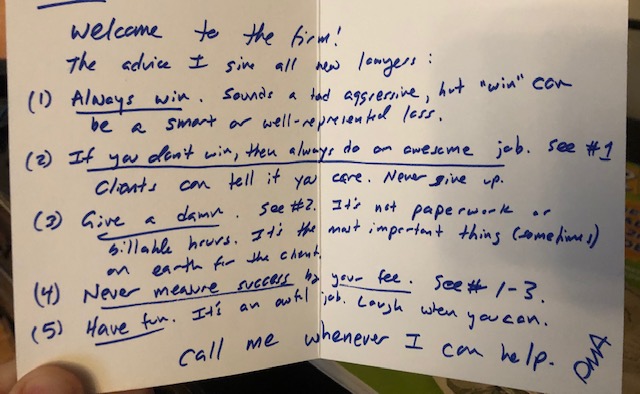
So, I probably got you with the dramatic headline, right? My departure at Bone has been as non-dramatic as you could imagine. Before I left, I wrote notes for all my fellow coworkers. Here’s the one I left to the newest associate:
It’s part career-advice, and also part recruiting pitch.
Nearly ten years ago, I preached about the virtues of patience and perseverance in collection of judgments. Specifically, I discussed Tenn. Code Ann. § 28-3-110, which says that judgments are good for ten years. For judgment creditors, a lot can change for your judgment debtors in ten years.
I constantly tell my clients that. For example, that Nashville property contractor who was dead broke in 2010 could be on top of the world in 2018 Nashville. Just be patient.
Under new(-ish) Rule 69.04, this can be done via Motion, but the Motion itself must be filed prior to the expiration of the judgment. So, Tennessee creditor rights attorneys, the burden is on you to make sure you’re making a list and checking it twice, looking for judgments that are nine years old, right?
Creditors: Make a Judgment List and check it. Twice, if necessary.
What happens if your law firm gets the judgment for a client but fails to renew the judgment?
In that case, the law firm obtained a judgment, generally discussed the 10 year requirement with the client, and, years later, no renewal request was made; the clients sued for malpractice.
There’s a lot to unpack in this case, but here’s my quick take-away:
When you get a judgment for a client, tell them that it will expire in ten years. As part of that message, remind them that people change firms, lawyers die, files get closed, files get dormant and sent to storage, things change, but, no matter what happens, if they want you to renew the judgment in ten years, they have to call you and specifically ask you to do it. Your representation does not necessarily include this renewal request, unless you and the client agree it does.
That was a decisive fact here, that the law firm had put the client on notice that specific action was needed to renew this judgment before ten years passed. As that ten year mark approached and passed, the client didn’t raise the issue, either by confirming that the firm did it or, alternatively, suing them for malpractice within one year of the failure to renew it.
So, in a perfect world, we calendar up all our judgments for renewal and we discuss the action with our clients in advance and mutually agree on an engagement for a renewal.
But, in reality, a lot of things can change in ten years. A good practice is to make sure that the client understands that it has a responsibility in ten years to notify you that it wants you to take this action.










 Creditors Rights 101
