Where a foreign judgment is based on substantive law that is inconsistent with Tennessee law, will a Tennessee court deny domestication of that judgment in Tennessee? The short answer is “no.” A Tennessee court will only look at whether the judgment is valid in the foreign state and will not consider substantive defenses based on Tennessee law.
Last week, the Tennessee Court of Appeals that reaffirmed that outcome, in Mantis Funding LLC v. Buy Wholesale Inc., No. M202200204COAR3CV, 2022 WL 17986892, at *1 (Tenn. Ct. App. Dec. 29, 2022).
In Mantis, the judgment creditor sought to enforce a New York judgment in Davidson County Circuit Court. The judgment debtor objected, but Judge Brothers looked only to whether the New York court was willing to set aside or entertain a challenge to the validity of the underlying judgment. When the New York court denied the debtor’s motion to vacate the judgment, the Tennessee decision was easy: “the New York judgment is entitled to full faith and credit in Tennessee pursuant to the Constitution of the United States of America.” Id. at *1.
The Court of Appeals agreed. Sure, confessions of judgment are void under Tennessee law pursuant to Tenn. Code Ann. § 25-2-101, but “full faith and credit” doesn’t require that the sister state’s judgment be consistent with Tennessee law. Instead, assuming that there are no service or procedural issues, the Tennessee Court will consider only whether the judgment debtor has challenged the foreign judgment and/or the substantive legal issues in the foreign jurisdiction. If not, “the decision is res judicata… [and o]nce decided, these issues cannot be raised in another, later case seeking to enroll the foreign judgment.” Id. at *2.
This is a fairly settled issue in judgment enforcement, but, because a judgment debtor has such limited bases to challenge a foreign judgment, the debtor will nevertheless “throw the kitchen sink” at the creditor. This new opinion reaffirms that such challenges should be denied.
I promised a follow-up to my “Best of List,” but, since complaining is more fun, I am writing about some things I disliked in 2022.
The courts system’s quick return to pre-COVID practices. You remember my rant when I caught COVID on a 5 hour docket in July. I think courts were too quick to abandon the pandemic innovations and return “to the way law was practiced when people rode horses to court.” Sure, a court might let you call-in for a hearing, but there is always a risk the technology won’t be up to speed, the judge won’t realize you’re on the line, or she won’t be able to hear you on the invariably staticky line. Having seen the trouble other lawyers had with call-in appearances, I decided to never risk my client’s case on a remote appearance. When in doubt and given the option, lawyers will generally appear in person. How about–for some hearings–there’s a process that allows for no other option other than to call-in?
There’s no state-wide, uniform e-filing system. My law practice has a fairly small foot-print. (My marketing materials call it a “curated practice.”) In the 3-4 counties where I do most of my work, I have separate log-ins for the different courts in each of those counties. Each e-filing system has its own set of rules, exclusions, and peculiarities. E-filing is awesome, so I’ll take a bad system over no system. But, having said that, why can’t the State of Tennessee establish a uniform system?
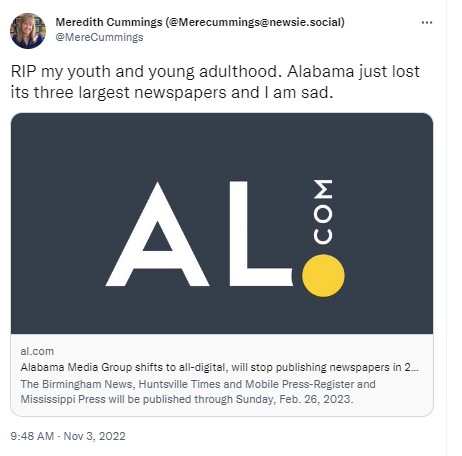
Our Tennessee foreclosure system is entirely based on physical newspapers. Until recently, I had a newspaper subscription, even though: (a) for the past 20 years, I’ve gotten 99% of my news online; (b) my local newspaper had shrunk to about 10 pages (total); and (c) my newspaper carrier generally delivered my morning paper either 8 hours late, the next day, or not at all. Physical newspapers are possibly the worst way to convey information in our modern age, but, nevertheless, Tennessee’s entire foreclosure and UCC sale system is tied directly to published notices in physical copies of newspapers. All over the country, newspapers are going to an online-only model (followed, most likely, by going out of business). But our foreclosure laws haven’t been updated. We’re headed for trouble unless we change these laws.
There’s no penalty for bogus lien filings in Tennessee. Sure, there’s the toothless “exaggeration of lien” statute (Tenn. Code Ann. § 66-11-139) or the confusing “slander of title” cause of action, but, by and large, if somebody records a piece of paper with “Notice of Lien” written somewhere on it (and includes the owner name and property address), they’ve got a totally un-lawful, but also practically-effective, lien. A few years ago, the Tennessee Legislature passed Tenn. Code Ann. § 66-21-108, which gave property owners a nuclear bomb to deal with invalid lien claims, but it was repealed within a year. As it stands now, there’s no useful remedy, other than to pay the invalid lien or to cancel your transaction.
Big Mortgage Lenders refuse to provide payoffs on their debts with impunity. One of the weirdest sub-plots throughout my 2022 was how near-impossible it was to get a payoff from mortgage lenders. In December, I had to sue a mortgage lender to get a payoff (and to stop an immediately pending foreclosure sale). It might have been the dumbest lawsuit I’ve ever filed (dumb as in the other side was dumb to make me go to the trouble): Within 24 hours of my getting a foreclosure injunction, the lender provided the payoff and, within a few hours of that, it was paid off in full. A win, except it cost more than $5,000 in unrecouped legal fees to address an unnecessary situation. There needs to be a law that imposes penalties, including attorney fees, in these situations.
I spent the entire year in a sales funnel. In 2022, after a full year as a small business owner, I took some time to evaluate my existing legal technology and services and what needed to be upgraded. On legal tech websites, I’d enter my email in order to download some awesome “Free Guide To _____” that promised a magical solution or explanation for some common problem or process. Having downloaded a number of those (none of which solved any problem), my phone rang all year long, over and over, with sales calls. It’s not “free,” if I end up in a Sales Funnel. My advice to service providers: How about sharing your expertise, impressing me with your vast knowledge, and leaving me alone, confident that I’ll return to you for my buying needs?
Phone calls from Tom James Company custom clothiers were the worst. If I ever find out who sold my name and phone number to Tom James Company, I will immediately sever ties with that organization (I suspect one of the bar associations did it). Tom James representatives were relentless in 2022. They called me so many times that I remembered the caller’s name (from the prior week’s call), could recite their opening line back to them, and remind them that I was the person who wasn’t interested because I buy all my suits from South Korea, just like BTS (not true, but why not go big, right?). After maybe 25 calls in 2022, I reached out to Tom James corporate, and asked if I could pay them something to be added to a no-call list.
Dealing with global, multi-state law firms. All of Nashville’s medium to big law firms are slowly selling out to mega-law firms. For the most part, I still deal with local folks on my litigation matters, but, on matters where a Tennessee law license may not be required, I have to deal with out-of-towners, and it’s rarely a pleasant, easy relationship. It’s a trend I’m dreading, as these firms bring their billable rates, minimum hourly requirements, other customs into the work they do in the local market. In short, their weirdness makes my job harder.
I miss old twitter. Many years ago, while waiting at a docket call in Montgomery County, I tweeted that I forgot to bring a pen for court. Within a minute, a local lawyer who follows me on twitter introduced himself and handed me a pen. Over the past decade plus of very-regular twitter use, I have found a vibrant and diverse lawyer community who post updates, victories, and advice. It’s awesome. Over the last few months, it’s gotten less active. If twitter as we once knew it goes away, we will have truly lost something.
The Lawyer-Industrial-Complex has gotten out of hand. Have you tried to hire a lawyer lately? If so, you were probably shocked by their hourly rates. The Clio 2022 Legal Trend Report (warning, you have to enter your email to access it) says that, in fact, lawyer rates are too low and haven’t risen with the general rate of inflation. I don’t know about that, but, holy smokes, lawyers and all the law adjacent services are so expensive right now. I’m using a Westlaw Rules of Civil Procedure book from 2020 because a new set (that will be obsolete in a month) is nearly $1,000. Some lawyers say that this isn’t a problem (more money in my own pocket, right?), but, frankly, it’s a trend that I don’t like. Prices are going up, but the quality of service is staying the same.
Having said that, where are all the good, reasonably priced Nashville lawyers? As noted above, I keep a small footprint for my law practice, and I refer out about 2/3 of the “new client” calls I get. My biggest problem with referrals has been “To whom”? I only refer cases to lawyers who will make me look good and will do an awesome job. Everybody on my existing list is swamped right now. What Nashville lawyer does good, competent, cost-efficient work? And, also, is looking for more work? I can’t find him or her. But I’m looking.
Everybody’s doing “end of the year” lists, so this is my list of law-related things that I’ve enjoyed in 2022, in no particular order:
Best Show About Lawyers?Extraordinary Attorney Woo: This South Korean legal dramedy follows Woo Young-woo, a new law school grad starting her career at a white shoe law firm. It debuted in summer 2022 to record-breaking ratings, and is currently streaming on Netflix.
The show offers commentary on the legal profession through a novel lens: Attorney Woo has autism spectrum disorder, so many of the profession’s customs and courtesies are lost on her. Through her unique perspective, the show thoughtfully examines universal issues facing lawyers everywhere, like burnout, imposter syndrome, and nuanced ethical issues (i.e. should an attorney care if their clients are corporate “bad actors”).
Maybe it’s the South Korean cultural influence, but the show presents a thoughtful and refreshing alternative to the typical blinged-out, L.A. Law-style lawyer portrayal. Added bonus? After watching the show, my kids think lawyers are really cool…
Best Lawyer Jokes on the Internet?Alex Su. Lawyer jokes are pretty bad, mainly because they play on misconceptions and miss their mark. Alex Su, a reformed corporate lawyer turned legal tech sales guru, knows exactly where to aim his mockery.
He may be the funniest lawyer on the internet, but, whatever you doand no matter how brilliant and hilarious you think one of his clips is, never try to explain your favorite videos to a non-lawyer. They will not laugh. Alex has invented the niche category of “lawyer-jokes-for-lawyers-by-lawyers.”
Best third-party service that has made my job easier?Proof Technology, Inc. The most frustrating part of a new lawsuit is often service of process. Especially when you’re dealing with an out-of-state defendant, and you have to hire an out-of-state process server and have no idea who to hire. In my experience, whoever you hire will not care about speed, customer-service, or communication with a “one-off” customer. Unfortunately, your own client will care desperately about all of that.
That’s where Proof comes in. Proof is a nationwide service of process company, who–after you upload your legal documents to their site–does all the work to hire, monitor, and make sure you get your documents served, using their network of servers. Due to their nationwide network, you get the benefit of their buying power.
In the past, I’ve just used a random google search and hoped for the best, but generally expected (and gotten) the worst. Since I’ve started using Proof, I’ve been shocked at how easy this process is. I can’t recommend them enough.
Best One-Stop-Shop for a lawyer logo, website, and everything else? Huckleberry Branding. I left my big law firm 2.5 years ago, and, since then, I’ve had three websites and three logos (well, the “third” incarnation is going to be unveiled in a few weeks). Of course, there’s an entirely different post about that, but I want to talk about Huckleberry for a moment. They are genius branders, artists, and designers, and they really learn your story and incorporate your vision into building a unique and representative brand concept.
Is it time to upgrade from a bunch of people’s last names yet?
If so and/or if one your New Years resolutions to update your brand, call Mariko.
Other best items? I’ll probably supplement this list a few more times over the next few days, so stay tuned. It’s sort of hard to remember an entire year all at once. Tune in for Part 2 later.
The Tennessee Rules of Civil Procedure are being updated to reflect how lawyers use e-mail in the year 2022 (well, really, how lawyers have been using email for the past 20 or so years).
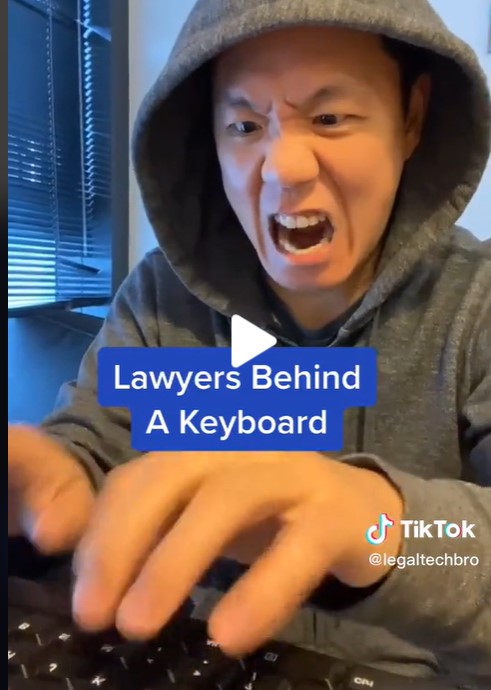
Lawyers email each other all day long. Constantly. It’s awful.
Law TikTok Superstar, Alex Su, showing us how lawyers email. He is, truly, a national treasure.
But, when it comes to sending opposing counsel a copy of a court filing, lawyers generally mail it.
This is largely due to custom (i.e. “the way it’s always been done”), but also due to the current version of Tenn. R. Civ. P. 5.02, which–even though it does allow for e-mail service–does not make it easy.
Under the current version, an attorney can serve via email, but only if there’s an attorney on the other side, and the sender must also send by “mail, facsimile, or hand-delivery” a separate notice that: says a document has been emailed; has a conspicuous subject line that a court pleading was e-mailed; includes the case caption; includes the official title of the e-mailed pleading(s); discloses the total number of pages being e-mailed and time of e-mail; contains a full statement of all the sender’s contact information and all email addresses of the recipients; and include a statement for recipients to notify the sender if the email is not received.
Faced with all these extra hoops to jump through, I have generally emailed the other lawyer a copy and, then, instead of doing all that extra stuff, would just print and mail a full duplicate set of the pleadings.
It was a complete waste of time, paper, and postage, but way less hassle.
Yesterday, the Tennessee Supreme Court issued an administrative Order that would modernize Tenn. R. Civ. P. 5.02(2)(a) in two important ways.
First, service by email can be effected on another attorney or “party” (so pro se and unrepresented parties can receive e-mailed pleadings, where they’ve provided an e-mail address). And, second, there is no longer a requirement to mail/fax/hand-deliver the other attorney or party a separate written notice of the email. E-mail service no longer requires the use of the United States Postal Service.
Many lawyers are switching to remote and non-traditional office space set-ups, and, across the board, e-mail is truly the easiest way to send notice of filings. In fact, in the rare instances when I’ve only first-class mailed pleadings, I wonder if the other lawyers are offended that I didn’t also email the pleadings for immediate receipt.
Sure, lawyers tend to hate change, and the amendments allow the “old guard” will continue to mail printed copies of documents, just like we’ve done for 100 or so years.
You can’t change old habits, I guess, but I’m glad to see these changes. They are an acknowledgement of how law is practiced in the modern world.
In 95% of Tennessee foreclosures, the foreclosing lender has appointed a substitute trustee to conduct the sale but, of those, about 10% mess the process up and conduct a defective sale.
First, some background. When a borrower grants a lien pursuant to a deed of trust, the real property is conveyed to a specific trustee named in the instrument “to hold title to the property in trust” pending the repayment. If there is a default, the trustee can later sell and convey title to the property.
These trustees are generally a closing lawyer or trust officer at the bank, but they are rarely the same lawyer who does the foreclosures for the bank. (Note: There’s no reason that they can’t be same.)
Later, if the bank decides to foreclose, one of the first steps is to appoint a “foreclosure” lawyer to be the successor trustee under the deed of trust. This is done by simply preparing an Appointment of Substitute Trustee, having the lender sign and notarize it, and recording it with the register of deeds in the relevant county.
Sounds easy, right?
Here’s where the mistake happens. When the decision to foreclose is made, the bank (or the lawyers) sometimes rush it out the door and start the foreclosure either before the Appointment of Substitute Trustee is signed or before it is recorded. (Spoiler: One of those is fatal to the foreclosure.)
Under Tenn. Code Ann. § 35-5-114(b)(3), if the Appointment is not recorded by the first publication date, there is specific “savings” language that must be included in the foreclosure sale notice. This text says, basically, that, even though the appointment hasn’t been recorded, the lender “has appointed the substitute trustee prior to the first notice of publication as required by Tenn. Code Ann. § 35-5-101…”
As a result, it’s still a valid sale, as long as that text is included. But, as this text also suggests, it may not be a valid sale if the actual Appointment of Substitute Trustee was not signed until after the foreclosure sale notice was published. If that’s the case, a court may find that the successor trustee was a stranger to the property at the time he or she issued the sale notice. (And strangers have no power to start a sale.)
Tennessee foreclosure statutes are non-judicial, which means it’s all just paperwork, but there’s an exact sequence of steps that must be followed.
This particular error is an easy one to avoid, but also an easy one to make. Many creditors want to foreclose quickly, which requires the lender and its counsel to satisfy strict publication deadlines to get the sale notice published and to obtain a sale date.
In doing so, they can often overlook the necessity of getting the initial paperwork executed in advance (whether it’s the rush of getting the sale notice to the local newspaper or the simple hassle of finding a notary for the appointment of substitute trustee).
As we have seen in recent cases, the failure to follow the technical requirements of Tennessee law and deeds of trust can result in a challenge to a foreclosure. It’s all paperwork, but make sure you get it right.
The short version of today’s post is: Always pay your homeowner’s association assessments in Tennessee.
In general, an HOA is created by the recording of a Master Deed for the community, and this Master Deed imposes a number of duties and responsibilities on the lots, generally via declarations and by-laws.
Because the Master Deed is recorded before any properties are conveyed to owners, it pre-dates those deeds and, to be doubly certain, the deeds to the lots generally contain language that expressly state that the transfer is subject to the obligations in the Master Deeds and By-Laws.
Every Master Deed you’ll ever see allows the HOA to make monetary assessments against the lots, assert liens against the lots for any unpaid assessments, and foreclose the property as a way to enforce the lien.
In some cases, the HOA’s lien rights relate back all the way to the recording of the Master Deed.
HOA foreclosures used to be rare, but, in this awful economy, I’m starting to see more of them. As a result, I’ve been spending more time with Tenn. Code Ann. § 66-27-415, a little-known (and very confusing) statute that provides the broad outline of the foreclosure process for homeowner’s association liens.
In short, the process is similar to the standard “deed of trust” foreclosure process found at Tenn. Code Ann. § 35-5-101, et. seq., but with some notable exceptions.
Notice. Per Tenn. Code Ann. §§ 66-27-415(a)(3) and (4), the HOA must provide notice of the sale via “United States mail, postage prepaid,” with that notice “deemed received three (3) days after deposit” in the mail. The notice is to be sent to “the unit” unless the owner has provided an alternate address to the HOA. (Note: A deed of trust foreclosure requires notice to be sent via certified mail, return receipt requested.)
Priority. Per §§ 66-27-415(b)(1), the HOA lien will be ahead of “all other liens and encumbrances” except: (A) liens that pre-date the Master Deed; (B) a “first” mortgage on the unit; and (C) ad valorem taxes. To be clear, a HOA lien may be able to jump ahead of second mortgages and judgment liens, even where those liens were recorded before the assessment came due.
Limited Super-Priority. Notwithstanding the carve-out for first mortgages, under § 66-27-415(b)(2), a owner’s association may claim a super-priority of six months’ of assessments from a first mortgage’s foreclosure.
Rights of redemption are statutorily waived. Per § 415(b)(3), the HOA lien “is not subject to the statutory or other right of redemption, homestead, or any other exemption, unless specifically reserved in the declaration.”
No Notice of Lien is Required. Under § 415(d)(1), the notice to the world of the lien is in the Master Deed.
Sure, the first step is to look at what the Declarations and By-laws say about foreclosure. Most likely, you’ll find a broad and inconsistent range of requirements. That’s why Tenn. Code Ann. § 66-27-415 is so useful. It is designed to impose a level of uniformity to the process.
Once the funds are paid out, though, I tell my clients to keep their fingers crossed for a bit more time–at least until the end of the Bankruptcy Code’s “preference period.” Until then, a Bankruptcy Trustee can “recover” payments received by creditors in the 90 days before a bankruptcy case is filed.
The question I often get is this: Does the 90 day period start when the Clerk receives the funds or when the Clerk disburses the funds?
An August 19, 2022 Minnesota Bankruptcy Court opinion (In re Holbert, 643 B.R. 332 (Bankr. D. Minn. 2022))(from the Eight Circuit) presents pretty compelling reasoning that the clock starts ticking upon the Clerk’s receipt of the funds.
Specifically, this Court held that the “transfer” (per 11 U.S.C. § 547(b)) for property held in custodia legis occurs when the property is placed in escrow / deposited with the court.
It will always be frustrating for a creditor to see the money just sitting there, in the court coffers, for 20 days. The silver lining, of course, is that the preference clock also appears to be burning off during that period.
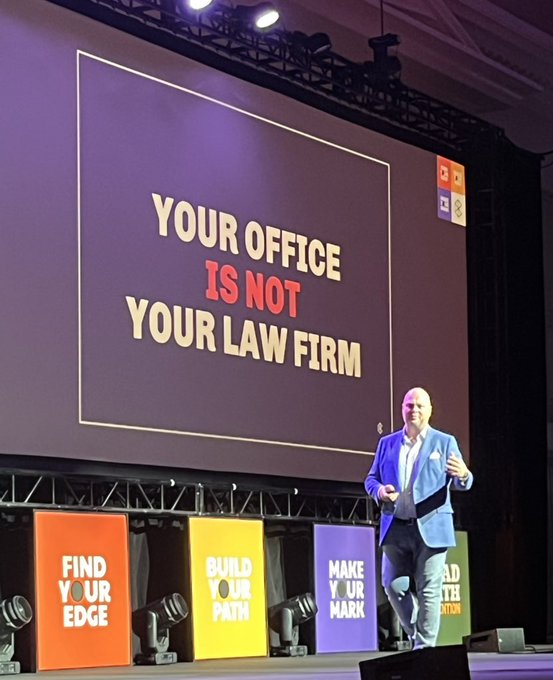
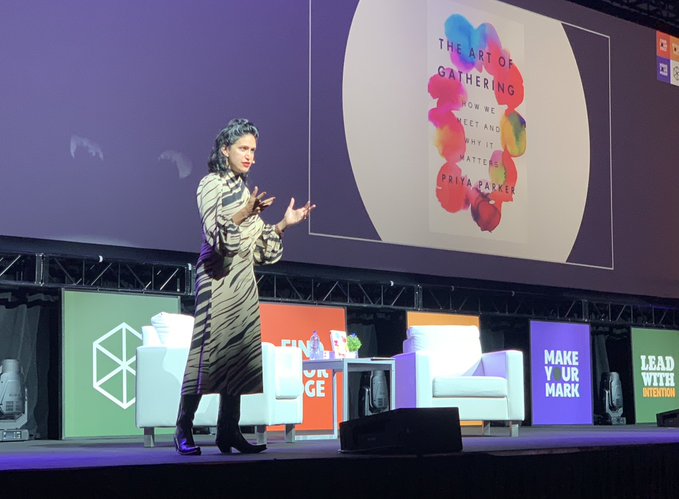
A legal conference where, at the end, you were sad that it didn’t last longer. Have you ever heard that?
You’ve probably never been to ClioCon then.
The simplicity of that arrow is misleading. This event was at Opryland Hotel. Everybody was lost, all the time.
Clio is a cloud-based legal practice management platform. With more than a decade of constant feature updates and welcoming third-party app integrations, Clio is designed to be a “one-stop-solution” for running a law firm. Billing. Document management and automation. Intake and client relationship management. Calendaring.
Basically, for everything a lawyer does during the day, Clio’s goal is to make it easier and more efficient. If they don’t offer a solution, let them know, and they’ll create one. One legal tech commentator called their culture “a cult of innovation.”
You probably think this is a paid post. (I mean, who shows this sort of rabid exuberance for legal practice management solutions?)
There are lots of law practice management tools out there, but none have the branding or message that these guys do (or care to have it). Clio casts itself and its users as rebels and disruptors. Clio knows its core audience, and ClioCon is a concert where they play the hits.
I’m telling you, Clio is a vibe.
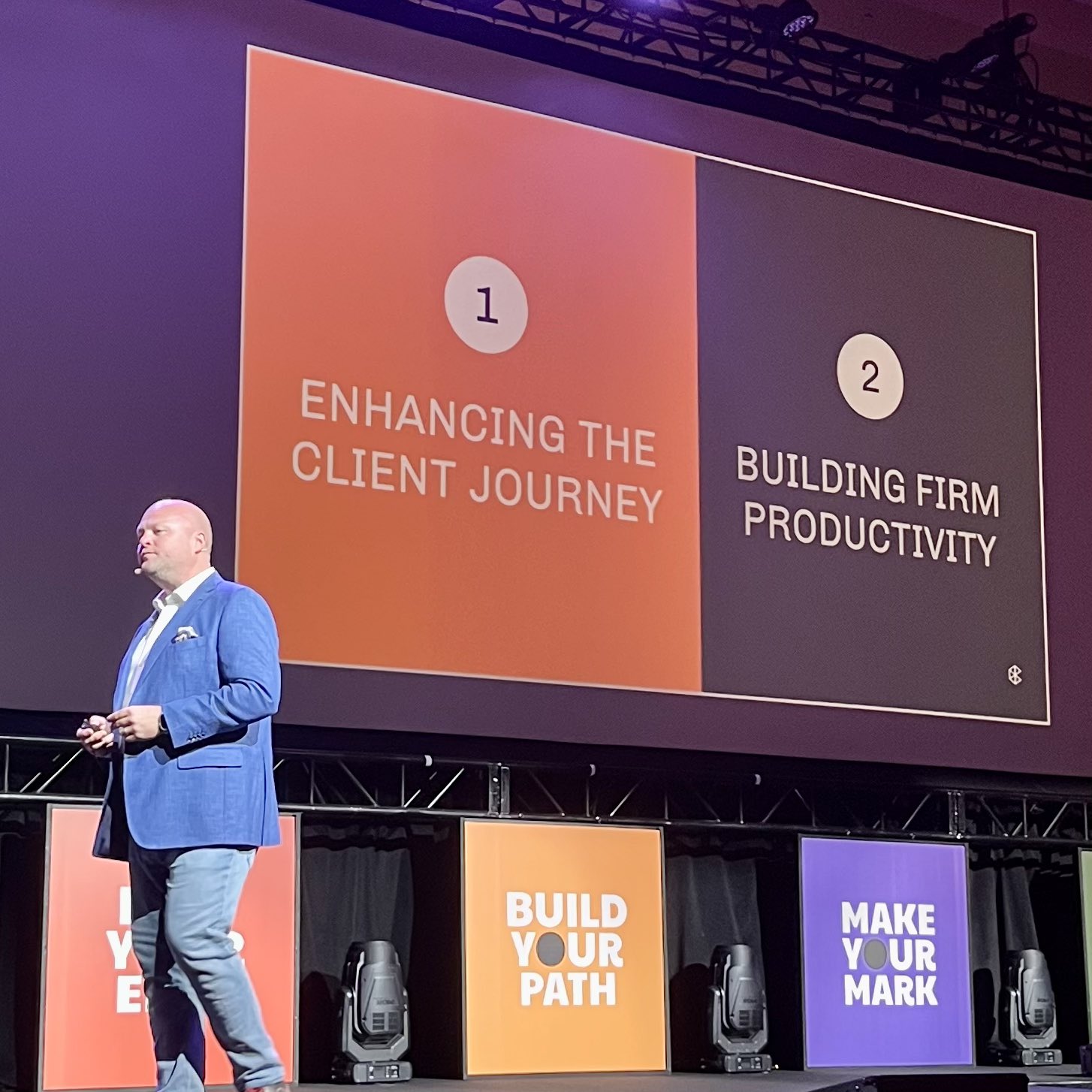
In his closing address, Clio CEO Jack Newton said attendees were part of a “tribe.” “We are part of a big community here with a common goal of transforming the legal experience for all,” he said.
Legal tech writer Bob Ambrogi wrote this about the 2022 event: “It is no exaggeration to say that this is a conference in which it feels as if every single person is there because they are deeply committed to improving the practice of law and the delivery of legal services through the better use of technology and the innovation of their practices.”
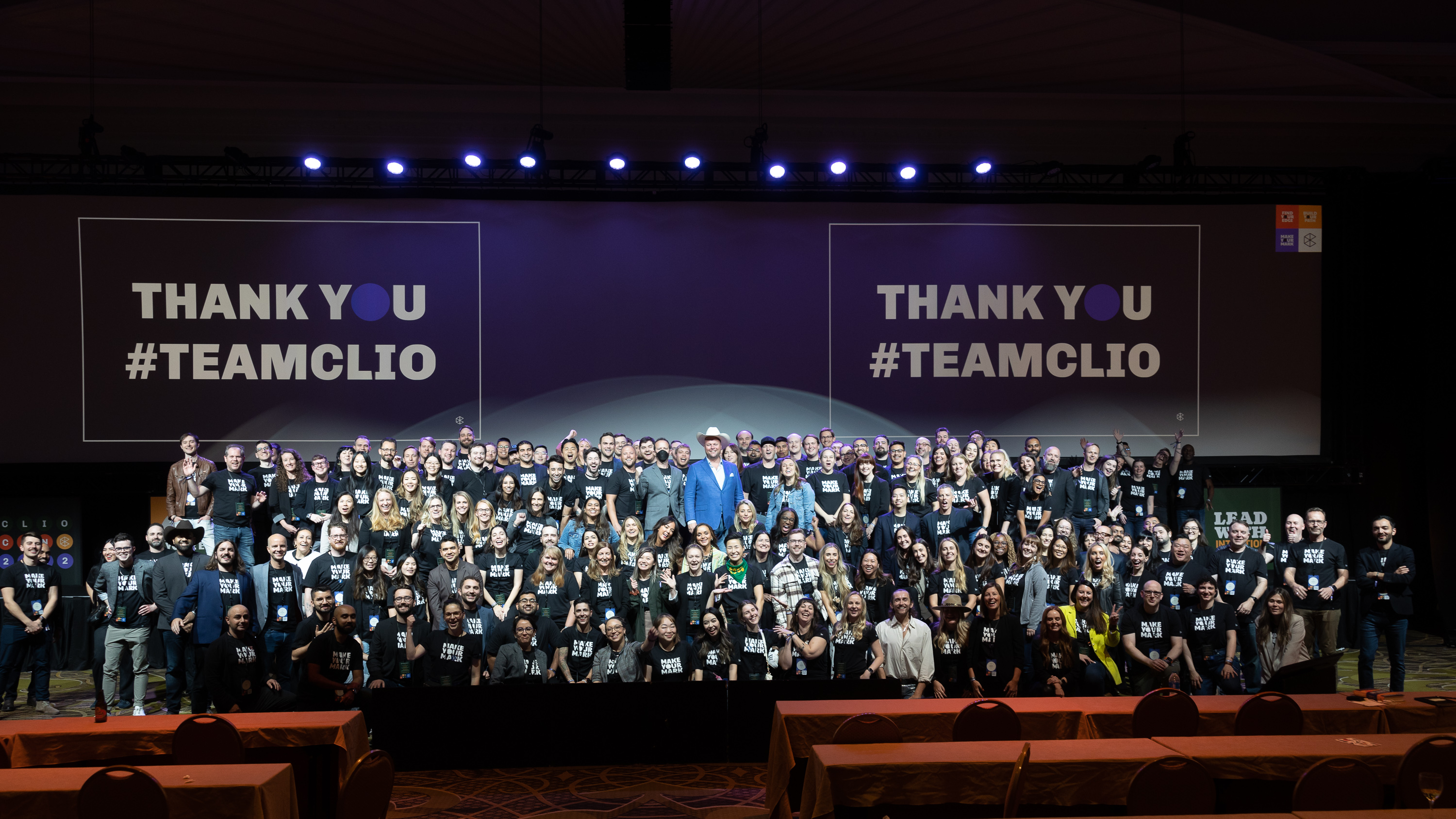
Clio and their some 200 employees were there, at every turn, offering impromptu training sessions, directions (ugh, Opryland Hotel), and friendly smiles.
It was like hanging out with 200 people who really wanted you to be better at your law job, but also were your new best friends, and, occasionally, a life coach.
Part instructional, part sales-pitch, part motivational/self-help pep talk, it was hard not to leave ClioCon fired up about being a better lawyer.
(I actually signed up with FOUR new technology service vendors after leaving.)
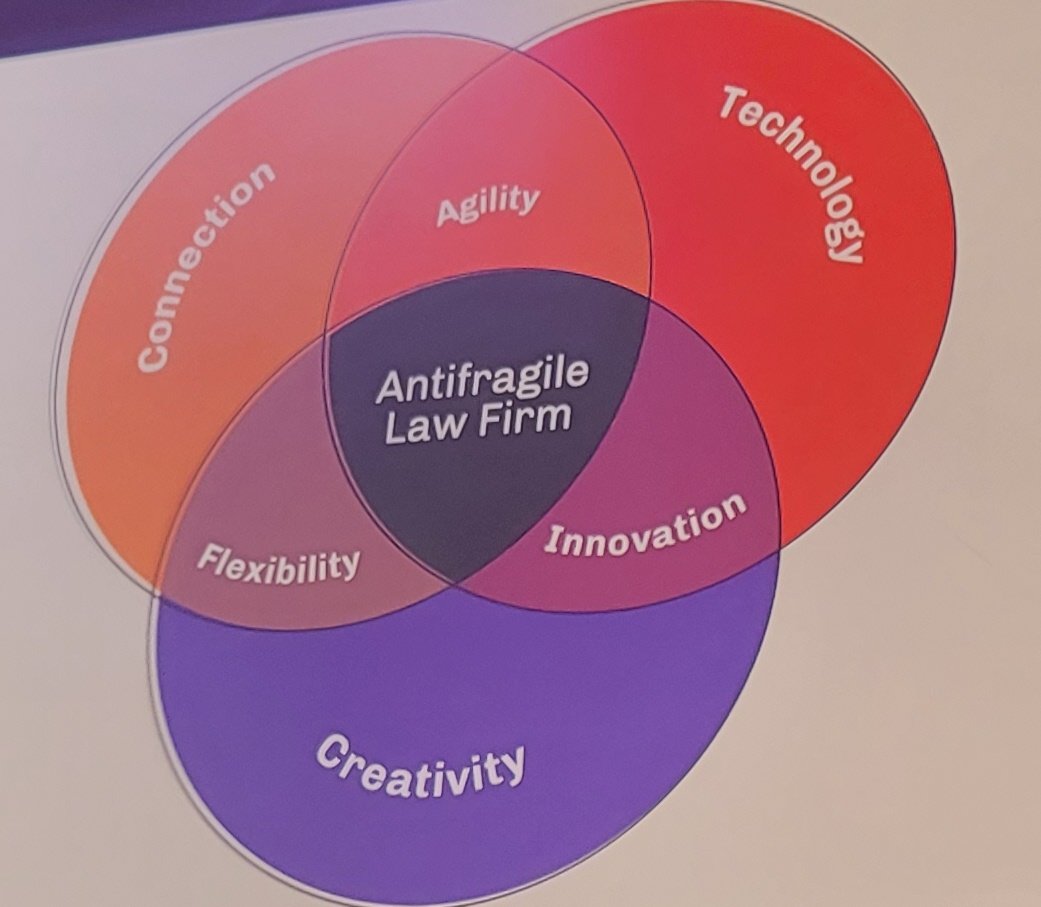
The theme this year was, essentially, the world political and economic landscape is a mess, only getting worse, and we (and our clients) are in for some tough times in 2023. What can we, as lawyers, do to prepare and to provide better service to our clients?
It’s different than a typical legal conference because of the diversity of attendees. People come from all over. Most are lawyers, but some are administrative staff and other legal professionals. Many attendees are neither, but work on innovations in legal technology and processes.
Nevertheless, across the board, the common theme was that we (the Clio staff, the attendees, all of us in the room) are collectively collaborating on something different, rebellious, innovative…and all with the goal to provide awesome service to clients.
Every conversation I had–walking all over that awful hotel; waiting for sessions to start; meals–the topic was “how does your firm [insert some technical/practical law practice task].” “What works/What doesn’t.” People were there for one reason: To be better lawyers.
Who can’t help but get fired up about that?
I’ve attended 3 ClioCons now (the first two were remote, due to the pandemic).
My first year, it felt like we all were in on a big secret. In the early COVID world, it felt scandalous to openly talk about things like virtual law firms, document and client communication automation, and fully cloud-based systems. This was a crowd that held zero regard for “The Way Things Have Always Been Done.”
It felt awesome and liberating to not have a Managing Partner hiding around the corner, waiting to tell you that “we’ll form a committee to consider your idea and tell you ‘No’ in 6 months.”
In the past few years, the rest of the industry has come a long way, but they’re still far behind the types of things that are being discussed as a matter-of-fact at ClioCon.
What I’m saying is this: Find your tribe. If you care about things like disrupting the status quo in the legal industry and ways to be a better (and happier) lawyer, come to 2023 ClioCon in Nashville (yes, again) on October 9-10.
You can register here. I’ve already signed up for it.
My only compliant: No karaoke. Clio, if you’re reading this, call me. I can fix this.
Neither Dell, Microsoft Support, or frantic prayers could save the day. My working laptop was somehow connected to an expired domain (my expired firm), and it was locked shut. (“A very expensive door-stop,” the nice lady at Dell Support in Texas unambiguously explained.)
After spending 5-6 desperate hours on the phone on a gorgeous early-fall day, I had cobbled together the diagnosis: This is exactly what the system is supposed to do in a situation like this; and The remedy was to wipe the computer and start fresh.
This was bad news.
If you’ve ever sat next to me at an event or at a cocktail hour, you know I like to talk in colloquialisms. For me, it’s a way to survive small talk, but also a way to be authentic and also contextually appropriate (i.e. to make a joke).
Maybe the best response from me would be a simple “I’m fine, how are you?” But, sometimes, why not be honest and funny (especially if you are one of the rare Nashville attorneys who has won a city-wide award for their sense of humor)?
If done well, the response is short, funny, but also brutally (and subtly) honest.
While doing the rounds on the 2021 lawyer holiday party circuit, lots of people asked if I liked my small law practice. My response was generally the same: “It’s the best job on earth, and it’s also the worst job on earth. But never in the middle. Sometimes, I miss the middle.”
It was quick, easy, and honest. For more than a decade, at somebody else’s firm, I spent a lot of years in the middle. I billed my hours and won my cases, but I didn’t have any say in the big (or the day-to-day) firm issues. It was frustrating and unfulfilling, but also comfortable and familiar and easy.
Plus, on any day when my computer didn’t work, I had somebody to call who spent their Sunday figuring it out.
In fact, that’s something I told the Tennessee Bar Association’s Sidebar Podcast last year: “My job used to be to show up, do awesome legal work, and write down my time. Now, my job is to do all that, and also take out the garbage.”
Back to the laptop. In the end, let’s be clear: It all got sorted out.
My legal tech “committee of one” had made the right choices about Clio (a cloud based practice management system), NetDocuments (cloud based documents), and a redundant Microsoft OneDrive backup. Plus, I have a backup computer (“Dynamite”) that is fully functional and has been promoted to first chair.
Other than the hassle, wasted time, and the year of my life that the stress cost me, all ended fine.
Last year, after using my “best job, worst job” line at a holiday party, I got a text the next day, from a managing partner at a local Big Law Firm who I had talked to. Maybe I wanted to interview with them and cut out all the hassle of running my own thing, he asked.
All he had heard was the “worst” part, I guess. It was awkward and awful responding (and I made sure to avoid him at the next holiday party), but I had to be honest: “Hey, thanks and I may take you up on that someday, but I’ve had a long stretch where it’s been the ‘best job’ and I’m going to ride this for a while.”
There’s not really a point here, other than to say that you should be sure to back up your documents in multiple places. And, also, that life is too short to live in the middle. And, finally, not to be too braggy, but small law firm life really is the best.
In July, I wrote about a July 2022 Court of Appeals opinion holding that even a defective foreclosure sale conveys valid title to real property. That’s because Tenn. Code Ann. §§ 35-5-106 and 35-5-107 expressly say that title is not impacted by a defective sale and, instead, the foreclosing trustee is liable for monetary damages.
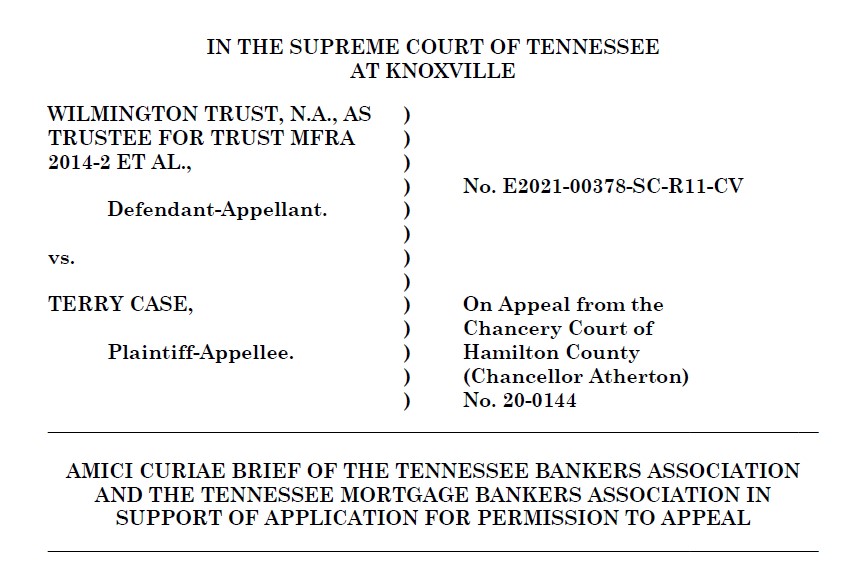
He was talking about Terry Case v. Wilmington Tr., N.A. as Tr. for Tr. MFRA 2014-2, No. E202100378COAR3CV, 2022 WL 2313548 (Tenn. Ct. App. June 28, 2022)– issued less than a month earlier–which held (sort of) exactly the opposite: “[A] trustee’s mere failure to comply with the terms of a deed of trust will render the foreclosure sale invalid.” Id. at *8.
How does the law reconcile these drastically different outcomes, based on the same wrongful foreclosure allegations?
Tennessee is a non-judicial foreclosure state, but don’t be lulled into a sense that foreclosures are simple (i.e. just “paperwork”). Instead, a foreclosing lender must simultaneously adhere to two separate processes, one of which is found in Tennessee statutes and the other in the underlying deed of trust.
Sometimes, they match; sometimes, they don’t.
If the lender doesn’t comply with any of the requirements of both tracks in full, though, this developing caselaw imposes drastically different remedies for non-compliance. Fail to satisfy the statutes? No big deal. Fail to satisfy the deed of trust? Here’s a nuclear bomb to your title.
Needless to say, this is confusing to creditors, borrowers, and buyers at foreclosure sales.
The plaintiff in the June 2022 case has filed an Application for Permission to Appeal to the Supreme Court (a full copy is attached below), seeking clarification on the splintered issues of law surrounding wrongful foreclosure claims. The Application opens with a direct message: “Tennessee wrongful foreclosure law is in a state of disarray.”
On behalf of the Tennessee Bankers Association and the Tennessee Mortgage Bankers Association, my office filed an Amicus Brief in support of the request to have the Supreme Court step in (also below).
This is a big deal. If this caselaw stands, title to foreclosed real properties will remain clouded until the wrongful foreclosure claims expire (6 years from the sale date). And, sure, a title company can vet the sale process, but title companies don’t like any risk, no matter how small.
This will render post-foreclosure title completely uninsurable. This isn’t good for anybody. Borrowers, lenders, buyers–everybody loses here.






 Creditors Rights 101